
Episode 055: Erin Twyford
What does it mean to be a critical scholar in an academy obsessed with metrics?
In this episode of Podcast or Perish, I talk with Dr. Erin Twyford, Senior Lecture in Accounting at the University of Wollongong. She describes her experience of a recent academic conference as a "fever dream." She sees her academic role as profoundly relational - to her family, to her colleagues, to her students, and to the Indigenous country on which she lives. She talks about finding hope as an academic despite pushing the mythical boulder of Sisyphus up the hill every day.

Transcript
Cameron: Dr. Erin Twyford has written an astonishingly honest and self-disclosing essay in the journal, Critical Perspectives on Accounting. It puts into words what so many of us have been feeling, that our lifelong pursuit of truth and our aspiration as critical scholars to speak truth to power have been captured and neutralized by the metrification of academia, where impact factors and journal rankings matter more than the research itself.
This, she says, is absurd. But what are we to do? We can protest, but like Sisyphus, our protest just pushes a boulder up the hill, only for it to crash back on us as soon as we think we're making a difference.
How do we revolt against a system that absorbs and commodifies our revolt? I talked to Erin and learned how emotional awareness and personal relationships make it possible for her to speak the truth for its own sake.
This is Podcast or Perish, a podcast about academic research and why it matters. My name is Cameron Graham, Professor of Accounting at the Schulich School of Business in Toronto.
Erin, welcome to the podcast.
Erin: Thank you so much for having me.
Cameron: Could I get you to introduce yourself?
Erin: Yes. Um, before I get into that, I just want to do an acknowledgement of country. So it's, um, sort of practice in Australia to acknowledge that we are on unceded land of Indigenous people, and that today I am talking to you from Dharawal country. And I was born and raised on this country, and it's a privilege to acknowledge these lands as Dharawal, and I want to extend my, um, respects to, the indigenous people, past and present, who are the custodians of that land.
In talking about who I am, and again, this is going to have a bit of an Indigenous, um, layering over it, and I think also speaks to what we'll be talking about later, Cam, but I am a wife and a mother and a friend and a daughter, and a daughter-in-law, and a niece and an auntie, and, um, a sister, a sister-in-law, um, granddaughter.
So there, there's lots of different parts of who I am and I bring that wherever I go. And I'm guessing for the purposes of this podcast too, that you'd like to know that I am a senior lecturer at the University of Wollongong here in Australia.
Cameron: We can talk about your relatives if you want. We don't have to talk about accounting, at all. Would you like to know about my granddaughters?
Erin: I would love to. Tell me.
Cameron: I have three.
Erin: Yep.
Cameron: And one of them lives with us. We live in an extended family household here in Scarborough, Ontario, uh, which is on Indigenous land, but there is a treaty in place for us to use this land. Um, the Haudenosaunee, the Mississaugas of the Credit First Nation, these are all First Nations that, uh, to whom this, uh, land, uh, I, I, I hesitate to say "belong", but it was, they were here before we were. And I know the notion of owning land is not something that is, uh, particularly consistent with an Indigenous perspective. So I know that much.
We have two other granddaughters and, uh, in a few days I am going to be leaving Scarborough and going to Calgary to visit the youngest two granddaughters. And my eldest son and his family are there. So, this is a time of my life when, uh, the relationships that I'm in are changing dramatically. As, um, you know, I... When you're next in line, it seems, and, and I'm talking about for dying, right?
Erin: Okay.
Cameron: You, and you and I have both written, uh, written papers on elder care or aged care. So we shouldn't be afraid to talk about these things, but, you know, my parents are no longer alive. My wife's parents are no longer alive. If everything goes without, uh, uh, a, a tragedy, uh, we will be the next in line. And when that happens, we are turning over the reins, so to speak, to the next generation .
Erin: Mm-hmm.
Cameron: So these are, uh, you know, my three sons who are now, um, involved in that. And, uh, these are tremendous adjustments that we go through as we age.
Erin: Yeah.
Cameron: As we, as we begin to reimagine ourselves. And, um, the reason I'm going into this detail is not just because you asked, but I think it's profoundly related to the paper that we're going to be talking about, which is about imagining and reimagining, reimagining our role in society as academics.
And that has to be done in the context of who we are as people. So, thank you for indulging me as I talk about my granddaughters.
Erin: I have so many more questions for you about that because that's, that's the most interesting part of us, right? Like who we are, not just what we do. And, um, I always enjoy when there's a keynote or a presenter who starts with a bit of context about who they are, how they got there, and why they're interested in that research, instead of just presenting as sort of this amorphous figure that has metrics attached to it that I'm not particularly interested in. Like, I am interested in people. That's probably why we do the sort of research that we do in the first place. So, um, it's probably not surprising, but yeah. Maybe we can chat later about, more about the granddaughters.
Cameron: It's certainly why teaching is important to both of us.
Erin: Yeah.
Cameron: Right? I know that you are an excellent teacher, and I have a, a strong reputation in that area, and I care deeply about teaching, and it's that immediate contact, immediate relationship with this Other, right? Trying to have a human to human relationship with your students. It's extremely important.
Erin: Very. I think being relational is so central to who I am as an academic and a teacher, and an educator and, and everything else, and relationships have to come first.
Cameron: Mm-hmm.
Erin: For me.
Cameron: Well, why, why don't we talk then a little bit about how you do your research, then. I was going to ask you about the particular topics that you've covered, and I know what they are. Our listeners of course won't. But, maybe we can approach those kind of from the side, by talking about the way that you go about doing your research and the relationships that are important to you in, in doing that research.
Erin: Sure. I think to do that I have to do a little bit of foregrounding with my context. So, I was supposed to be a medical doctor. And I did excellent on the empathy test and I did terrible on the critical thinking, which was more like, take this shape, move it this way. Now what does it look like? So then I had to pivot and I thought, okay, what, what's next? And then I tried law. So I started off doing a double degree in arts and law. About six weeks into the law degree, I thought, this isn't for me. I finished it, but I thought I'm going to have to do something else other than arts. And the arts was really for me to be able to do historical studies, because I'd really enjoyed that at high school. And then I pivoted from the arts to commerce and found myself in accounting. And it wasn't until I came across Warwick Funnell's paper on accounting and the Holocaust that it was, it was like this light bulb. And I thought, wow, accounting can do history stuff.
And I'd always had a really strong interest in, in the Holocaust, in things like, um, the Russian revolution and things. So, It then became, I guess, a pathway for me to pursue that interest while doing something that felt like I could be an accountant if I wanted to. Um, did a short stint with a Big 4 and as an intern in our capital city, in Canberra.
And I stayed with family during that time and they had two young children, my niece and nephew, and I remember there being three days in a row where I never saw them and I just thought, that's not the life that I want. So I started looking at academia and, and that's kind of how we got here.
And, and thinking about what sort of research I could do, I thought about, well, I, I want to do Holocaust research. Even though I knew Warwick had done work there, that's where I wanted to go.
Um, and it was through that, that I think I keep looking at particularly vulnerable people. So, you know, I did the PhD on the Holocaust and then straight out of that, I formed a collaborative relationship with Farzana Tanima and Sendirella George. So, Farzana and Sendirella and I met at a conference back in 2013.
Um, I think I had just put in my PhD proposal and they were so lovely and welcoming and I was so excited by what they were doing. And then we met again at the APIRA Conference in 2019, and we talked about how annoyed we were by the metrics, right? That we were sick of being sort of closed in on what we had to do and, and we talked about the things we're actually really passionate about and we thought, why don't we form a bit of a collaboration, then? Do the work we're interested in and if we kind of have the three of us, we should be able to get more output so we can satisfy that element while doing what we want to do.
And the first thing we kind of looked at was, um, asylum seekers and we had a bit of an agenda on that and we're still kind of trying to get some work out about that. so that's how that became a thing. And then of course, I think I mentioned we met in 2019 and then 2020 was COVID, right? In Australia in particular, the hardest hit at first were the aged care facilities. The older people.
And I remember specifically, um, the former Prime Minister making a comment about how we... maybe families should just let them die rather than, you know, shut down the economy, or, and it was shocking to me 'cause these were literal words that I used for my Holocaust research. Let them die, right?
So, to hear somebody in power saying that about older people during COVID, I felt like that was an area that I wanted to look at. And when I looked into it, there wasn't a huge amount of work being done on aged populations. So I think the way that my research has kind of streamed is definitely looking at more marginalized people, vulnerable people, and particularly how accounting systems further marginalize them, dehumanize them, and can even sort of enable violence against them, um, or justify that violence.
So, my work since then has very much been about looking at who do I really admire in the space, and I guess just reaching out to them and hoping that they'll take a bit of a chance.
So, I did that with Warwick and we've done some work on some Holocaust things. Farzana and Sendirella, who I've worked with. I reached out to Jane Andrew at one point who very surprisingly said yes, and now we have a few different projects happening, particularly in aged care. So for me it was about looking at what I'm interested in and then looking at who's work do I admire and, and I want to do things like they do.
So I guess that in a nutshell, that's my... how I've gotten where I am.
Cameron: There is no end to the ways in which accounting insinuates itself into the fabric of life, and the conduct of power.
And this means that if you study accounting, you can study anything.
And anything that happened at any time.
Because accounting leaves records.
Erin: Yes.
Cameron: So this is, uh,... One of the beauties of being an accounting researcher for me is being able to look at anything and realize that there are people who know far, far more about that topic than I ever will, but they know usually very little about accounting, and I can contribute something to the conversation.
Erin: Mm-hmm. Yeah, and, and some of the aged work stuff has happened that way as well. So connecting with health experts, public health experts, political economists. It's just, it's really interesting to hear these different points of view and, um, to share as well. So they share their research and their knowledge with me, and I share,... You know, for most of them the idea of even a critical accounting stream, where you know, it's not just numbers and things and, and the amount of times, you know, I meet people in the corridor or something and they'll start talking about their research and go, oh, you wouldn't care about that because it's not quantitative. I'm like, Hmm. I actually, I don't look at numbers at all, really.
Cameron: No. But, there is this tendency, as you've alluded to in, certainly in the academy, to try to convert these qualitative things into numbers and to use those numbers to represent reality. So that is something fundamental to the thing we're studying.
Erin: Yeah.
Cameron: Tell me a little bit about your engagement with this notion of the word "critical." Because this, you know, we'll turn specifically to the paper, but when do you begin to identify as,... When did you begin to self-identify as a critical scholar?
Erin: Oh, when did I? Do you know, it was probably... during my honors year. So my honors project was quite a, I would say, mainstream type approach. And I got introduced to the work of Michael Gaffigan, who of course has very strong relationship with the University of Wollongong. Um. And, and he kind of introduced me to this notion of critical work.
And then that just became the work that I was interested in and started looking at. Um, and I don't know, maybe I adopted it before I should have, but um, the other thing that I think really drew me towards it was we had Ed Arrington come to the university and he was such a enigmatic person. And I think looking at his work and being exposed to his ideas, um, and then of course the, the Wai-Fong Chua paper and things like that.
So there's lots of, I guess, little bits that mosaic into becoming this, this identity of critical. But for me, I think it's mainly about pushing back against certain things. And I think emancipation has to be central. Whether or not, you know, that's a major emancipation of the micro emancipation that I talk about in the paper.
I think it's the idea that things can be better, that they should be better, and that we need to call things out wholeheartedly rather than, um, I don't know, not bearing witness or tempering things to make it more palatable to certain people. That, to me is, is critical work.
Cameron: Mm-hmm. It's, uh, profoundly hopeful, right?
Erin: Yeah, I guess so. Yeah.
Cameron: It's interesting, you know that I am sometimes, uh, labeled as something of a pessimist because I'm always finding fault with the way things are. And you know, this is something that happens not just in my academic work, but in my personal life. But the reason that I find the way things are problematic, is that I really, really believe they could be better.
Erin: Mm. Mm-hmm.
Cameron: It's an underlying optimism, not an underlying cynicism.
Erin: Yeah, totally.
Cameron: That makes me critical.
Erin: Mm-hmm. Yeah, I think. That's it as well, because if, if we had no belief things could be better, I don't think we'd be doing this research, either. You, you have to be driven by the idea that what you do could matter or could, you know, move the compass just even so slightly.
So, I agree with you. I think I take things very, very critically. Sometimes too black and white, without understanding there are shades of gray or nuance, but always underlined by the idea that we, we can do better and accounting can look at things slightly differently and that might take, you know, decades or whatever, but it can change.
Cameron: Yeah. I tend to be more patient with individuals than am with systems, right? So when I'm talking to a person who is enmeshed in the way things are, as say a politician or a, a CEO or another professor who studies things uncritically, I assume that they are people who are acting in good faith, and it's the system that's the problem.
Erin: Yeah.
Cameron: That's not to say that there aren't people who act in bad faith, but my focus is not those individuals. It's the way things are put together that interests me. But you know, prior to about 2016, we lived in, um, in a system that, where we believed that if we could somehow point out the truth about things, that it would help to improve things. And it was the election of Donald Trump, the first time around, that really was a, a punch to the gut for me.
Erin: Mm-hmm.
Cameron: And it made me question what I was doing, because if someone can be elected to the most powerful office in the world on the basis of complete lies and complete disregard for the truth, complete and utter disregard for the truth, then what's the point of doing research to find out what actually happens, right?
What's the point of being concerned about the evidence of an alternative voice has been suppressed in the accounting records? As is often the case when we're doing research on indigenous topics. So if it doesn't matter what we're doing because the truth doesn't matter anymore, it becomes an extremely difficult job to do. And I, that's when I really, I went through, you know, something of a crisis of faith in what I was doing as an academic. And, I started this podcast as, you know, as a way of trying to, um, find out from other academics why they thought their work mattered, because I wasn't sure if mine mattered anymore. And it's been a very, very lovely experience talking to other academics.
I'm not sure that I've got any closer to a definitive answer on whether academic research matters anymore. It certainly matters to some people, but does it matter in the world at all? And I think that's probably a good place to turn to this particular paper that you've written about, that you've written that has caught my eye.
I will read the title of it and I can't do parentheses when I'm talking. It's a very postmodern title with, you know, parentheses around things, but it is called:
"Revolting rituals: Critical accounting and the honesty we owe."
Could you describe to me who you had in mind as an audience when you were writing this paper?
Erin: Sure. So, um, I mean the audience is especially our discipline, so critical accounting, but actually more broadly as well, um, in academia, because I had a feeling that the things I was thinking were not, you know, a, a critical accounting phenomenon. And, you know, I did have other people outside of discipline read through the paper as well, and they said this is exactly what's happening here. You know, I feel so seen for, from having read that.
So, um, but I guess, yeah, the initial audience was our, our critical accounting community and, It was supposed to be, I guess, a bit of a pushback against everything that we've seen. I know you said, you know, 2016 was a real gut punch. I feel like it's daily knockouts with Trump at the moment, right?
Like it's certainly accelerated and escalated. Um, what I wanted to do was call out some of that, but I also realized that lots of the things he's doing are not, again, just within his community. It's not just happening in America and it's been happening in other countries for a long time. So I, I wanted to, I guess, focus in on us and what we could do to respond to, as you say, you know, where truth doesn't matter anymore, what can we do? And that, for me is the point at which we have to be really serious about the truth. So in a world where truth is contested, you know, honesty becomes a really special terrain and we need to really hold onto that.
Cameron: It's a radical act.
Erin: The whole idea from this paper actually stemmed from attending a conference. And I dunno if you got that when you read it, that I was really upset with this conference because, you know, we gather once a year basically in, in these big international ones, and we are there to talk about what's going on in the world. Yes, about our research and about ourselves, but ultimately if what we want to do is make accounting a little bit better, then we should be using this as dialogue to do that.
And what I saw instead was this almost practiced politeness, this, um, almost cult-like adherence to making sure that the bigger names were happy. And even at the start of the conference, we were told, you know, we're not going to bring anything else into it. Right? Whatever's happening out there is happening out there.
Like, at the start. And I was looking around like,
For real? But that's what we do.
Anyway, and um, there were lots and lots of different events and I say in the paper, you know, it feels like a fever dream. Because that's what I thought I was in. I was looking around for others to be looking like me. Like, is this actually happening?
Are they actually saying that? Are we witnessing this? Um, of which there were others. And I, I came home and I literally just sobbed because I was so disgusted and distraught at what had happened. And, the other thing is, you know, with the marketization of universities, I'd self-funded this trip. And that means sacrificing not only time but money that my family could have spent elsewhere.
And I just was so upset because it felt like such a waste of time and money and..., and I was thinking, you know, the opportunity cost of where else that could have gone. And so the paper was really, I guess almost a cathartic experience of trying to get out everything that I felt there and then thinking, Well, how can I channel this for something that actually does, or potentially could, make a difference? Rather than, I don't know, just stewing in it and getting more and more angry. And how can we as scholars start to look differently at what we do and how we interact with each other? How we, um, even, you know, promote ourselves so that it's not such a narcissistic display and it's more of a relational thing, right?
Like, I want to talk to people, I want to hear their views. I don't care. Like, their metrics could be the same as them telling me about their shoe size. You know, it's just, okay, whatever. Like, it doesn't matter to me.
I just wanted to bring back a little bit more of the humanity of our discipline and to say, you know, it's okay to push against other people.
I have had an email from someone who didn't like the paper, and I was like, you should write about that. You know, put it out there, then, if you, if there are things that you didn't like.
Because, like I said, this practiced politeness is not, it's not critical. It's not what our community's about and we are able to take that criticism, I think, and turn it into a healthy discussion rather than just make it almost like walls around the research that we do.
Because to me, again, that's what critical accounting is about. It's about friction and being able to sit uncomfortably in spaces rather than have everything just be, you know, I think I, I call it the ouroboros in the paper, where we just are on this treadmill of publish, repeat, research. And, and, and stay on that treadmill rather than stopping and thinking about the research and other people.
Cameron: Right. You and I share, quite obviously, a very emotional, attachment to our research or an emotional engagement with our research. I have always described my perspective as that of a middle child. You know, my older sister was pretty and got to do things that I could never do, 'cause you know, she was three years older than me and in high school, for instance, and I would be too young to do some of those things. And my younger brother is cute and sardonic and hilarious and could say things that I would, I would get spanked for in that day and age, right? And he could get away with things. And I was stuck in the middle kind of upset at the way things were. Everything seemed to be so unfair, right? So it's, it's not that I'm motivated by a great sense of justice. It's a great sense of injustice, right? So when, when I see things that bother me about the way the world is, that's what I want to dig my intellectual tools into, to try to find some meaning in that.
Erin: Yes.
Cameron: For me personally, it's uh, the production of meaning as much as the production of change. Like I think the production of meaning for me has to come first before I can begin to think about change. I have to understand who we are as a people and who I am as a person in this context. So this is, you know what, what pushes me to do my research, and you have to described it just as we were talking, you were describing this emotional reaction to this academic conference.
Erin: Mm-hmm.
Cameron: So, I appreciate your emotional honesty, but I wonder what is, how do you then see the role of the academy, of academia? Is it the ivory tower? And if it's the ivory tower, is that good or bad? Like what is academia to you?
Erin: Uh, that's a good question. Um, in answering, I guess, again, it's a little bit informed by some of the work that I've done with Indigenous colleagues where, you know it, it is an ivory tower and it's not safe. It is a very colonial space that perpetuates colonial violence, particularly onto people of color and I don't think its turn to the managerialism is good in any sense at the word.
Cameron: Right.
Erin: But I think the, at least the way modern universities are run in Australia is far too caught up in trying to run them as businesses and not being concerned...
Cameron: This is what you mean by the turn to managerialism.
Erin: Yes. Yeah, they're not concerned with the production of knowledge, actually. I remember going to a meeting, a town hall actually, and they told us, here are our five pillars. Pillar one, research and teaching. And I dunno what the other four were, but I thought if that's pillar one, the other four aren't really that important actually. Like they obviously are to, to management and the executive, but, and to bundle them into one as well was...
Cameron: Well, yes, exactly.
Erin: Emblematic, right?
Cameron: You know, saying that research and teaching are only one fifth of our priorities is saying the quiet part out loud, isn't it?
Erin: Yes. Yeah. Yeah, exactly. And so I think we need to go back to that, to the idea that universities are not producing things, like tangible things.
So another thing that on my first day, um, I went to a thing and they're like, you know, our clients want this. So who are our clients? And a bit later then referred to them as students.
I was like, oh, this, this is not what I signed up for.
Cameron: Copy and paste from a corporate PowerPoint slide,
Erin: Yeah. Yeah. And if, if that is the case, then the product is the degree, right. And to me, you know, I, I think there has been a change that I'm seeing in the students coming through in the last couple of years. They are less seeing it as they're a client who deserve a product.
And you know, I've even been told, you know, "You work for me." Like, ah, not quite. Um, and they are starting to get back more into the knowledge. I don't know how AI is going to interact with that, but I've definitely seen a lot more interaction, interest. Like they are genuinely showing up and wanting to learn, versus getting an outcome and then moving on from that.
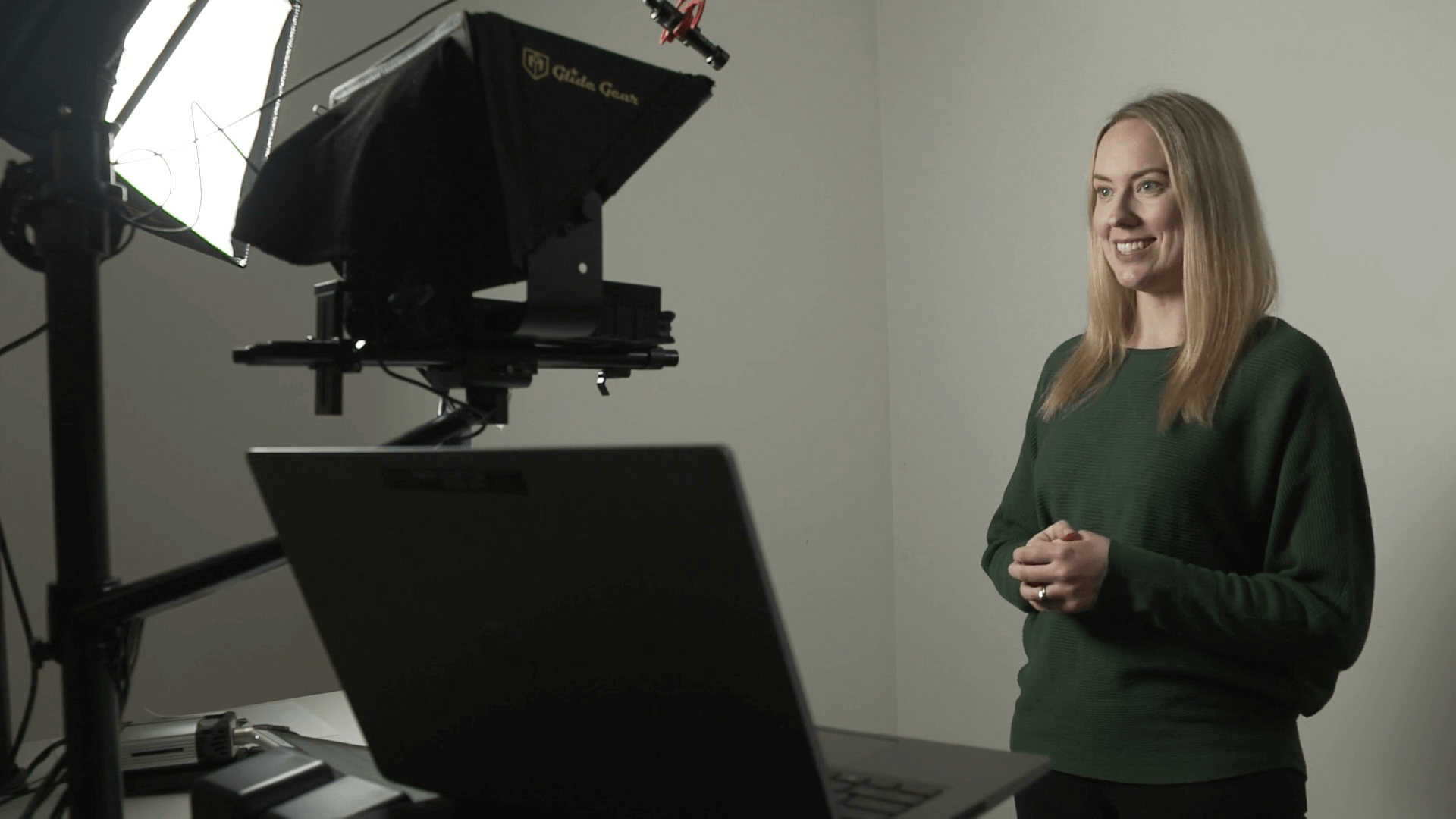
Erin centering knowledge production at the DIY Studio, University of Wollongong.
Um, as much as the university, I don't think is helping with that. You know, I think they, they help put forward that pipeline, but I would just love to see a return to, to more knowledge, really centering knowledge production, be that in research and teaching and getting back to some of the core functions.
I don't know how to do that. It might be too late, you know, it might have been corporatized beyond bringing back. But, um, I think a lot of it will come down to good leaders and leaders who are going to center that and I, I haven't seen that for a while, so I don't know. What's the experience like at, in Canada?
Cameron: Um, extremely managerial.
Erin: Yeah, so very similar, yeah.
Cameron: Very, very similar. Of the things you've just said, the thing that stands out to me the most, that I need to be honest about is that for me, the academic space is extremely safe. I am a white male and I have tenure. I'm a full professor. I am in this almost unassailable position.
Erin: Yeah.
Cameron: And that is something that I take very seriously. How can I use this position do something that matters?
Erin: Mm-hmm.
Cameron: And for me, the most important thing is to recognize that my contact with students is the most direct platform that I have for my research, and to integrate my research and my teaching together. And you talked about those, you know, facetiously as being combined in one priority for the university, but for me it's the integration of research and teaching that has made teaching more meaningful to me. That I'm not trying to hide who I am as a researcher and just teach the textbook.
Erin: Yeah.
Cameron: I'm trying to give students a, a sense of how I see the world, not so that they can think like me, but so that they can see that there are different ways of looking at this material and they can pick and choose a perspective for themselves that works for them. And I encourage them to do that. I encourage them deliberately to, you know, take what I'm saying with a grain of salt. This is my perspective. It's just me, but I'm not going to hide it from you. But I want you to make up your own mind about how you think about the role of accounting in the world and the importance of this stuff. Because your situation as students is so extremely different from mine when I was a student.
Erin: Mm-hmm.
Cameron: Right? Your relationship yourself and what you're learning and your future is dramatically different from it what was for me. I know that you're getting into a lot of debt in order to take this course.
Erin: Yeah. Mm-hmm.
Cameron: And your job prospects are pretty bleak compared to what they were like when I was growing up and going through university. So I don't expect students to the world as I do, but I want them to see that I do see the world.
And it's a specific perspective that I want to share with them so that they can understand that seeing the world from your perspective is important. To recognize what's going on when you're seeing the world. That is not, you're not just seeing the truth about the world. You're seeing the world from a perspective, and that helps to develop some reflexivity in all of us.
So, to go back to this emotional reaction to this conference - in your paper, you refer to a decontextualized, uh, keynote speech, so I won't ask which speaker you're talking about - but we've all heard them, right?
Erin: Yes.
Cameron: They're very nice, very, um, helpful kinds of presentations that give us a sense of perspective on what we're doing. But to say that we are going to set aside the way the world is right now in order that we can just enjoy this conference is, I think, very much to misunderstand our role as academics. We need to be writing from that place of an emotional reaction to the world.
Erin: Yes, and I think, you know, sometimes we are not always able to do that within the academy. So to me a conference is a place where we can do that. Right. So, you know, you said that you are quite safe in that space. In lots of ways, I'm safe too. And others maybe not so much, but, um, but conferences are supposed to be, you know, a community gathering around us where we can say what we like or what we need to say, and have those discussions that, you know, like I said, in the corridors I can't have, 'cause people aren't even sure that my work is a thing, or that they can talk to me about things because they think I'm just going to spout numbers at them.
So I think the, the idea that, you know, we have these outlets for that and we're not using them in that way, was just really... and, and that's, that hasn't been my, my experience. You know, this was probably one of the first times where it's felt very jarring like that.
And probably at one of the most politically and socially escalated contexts that I've had to live through. So it was just very weird that we would be living through that, have this space, and then almost be told not to talk about it, and then to have that play out where we, it isn't talked about. To have keynotes that were primarily more about how great they were versus stuff that matters, like, that I could learn from or... and again, not always my experience. I've had keynotes in the past who have been brilliant and have absolutely extended my thinking.
I'll say at this point too, so I went to a different conference as well, and this one I actually take my daughter to. Um, They're 10 and, you know, they're able to engage with the keynotes, which I think is great. I mean, there's some they can't.
Maybe you should take your granddaughters to a conference, Cam, because after my presentations I get a little list of who was on their phone or who was checking their email, which is great.
But I think, um, that's another way that I think the Academy can expand. So, you know, it wasn't that long ago where these were spaces that women couldn't occupy. Right. And I think it's, again, a very colonial, patriarchal, whichever persuasion, to keep children out of these spaces too. And for me it's a very deliberate act of bringing my child in there because A, I think children belong everywhere.
And also B, because, you know, it's so nice to see them in that space interacting with these ideas. Like we shouldn't wait until we get to, you know, third year university or second year to, to start discussing things. What I really like is, you know, now they're talking about the conference that's coming up again and they're saying, you know, I, I can't wait to see Jane and Farzana and, and, and your friends are just like me and my friends.
Like, um, I just think it's so nice to include people in spaces where traditionally, especially in the academy, actually, they would be barred from, because of, I don't know, archaic rules or whatever else, or they're just not seen as being that important to that particular ecosystem. But, you know, my child might be a future academic, might be a future student, and I just think it's good to, to make those spaces more open and safe, in any way that we can.
Cameron: So it's on behalf of your child that you are pushing this boulder up the hill, right? This is,
Erin: Yeah.
Cameron: This is the metaphor that is at the heart of your paper. You're using the myth of Sisyphus to describe this critical accounting task, that we push the boulder up the hill and it rolls back on us every time Trump gets elected.
Erin: Yeah. Yeah.
Cameron: Right. So, what comes out of this though is not despair. It's a different kind of an understanding of what it is that we are trying to accomplish. Can you tell me about that?
Erin: Yeah, I read a paper where they used this metaphor and it, for me, just clicked immediately. I'm like, I feel like Sisyphus. So I, I wanted to use it in that way. And what I found really interesting about using, you know, Camus's idea of this and all of his other ideas about how to actually push back on that boulder and all of that, was the notion that, you know, I might complain about the boulder, but I chose it, as well. You know, like Sisyphus didn't. Sisyphus is the ultimate metaphor of futility. And yes, there are certain elements that are futile, but because we chose it, I think we can also choose to see meaning in pushing it. Which is why, you know, the last section I talk about how I learned to love the boulder. Which you know, may also sound like Stockholm syndrome. I don't know.
But it was mainly because I was thinking about how even though all of this angers me and upsets me, I'm still excited every day to do my work. I love what I research, I love who I work with, and for me, there is meaning in what I'm doing. Sometimes it creates a crack. So, you know, for instance, I did have, um, some aged care advocates reach out to me, for a paper I did about financial gaslighting and the financialization of elder care.
And they said, you know, no one's talking about this. And we were so happy that, you know, it's, it's getting seen in academia and, you know, I was invited to speak at a workshop and the other speakers were CEOs in community care, um,, aged care or healthcare experts. So it was great that there was able to be, I guess, an accounting person in that to also learn from them as well.
For me, you never know what's going to gain traction, what might just create just a slight... might allow the light to get in to that crack. And for me, the meaning is found by, to use a metaphor, you know, looking around the mountain and seeing the other people pushing their boulders. And so their, um, tenacity, I guess, inspires me as well.
And, you know, we all have moments where we think what we're doing is futile, where we sob and we get, you know, distraught or disgusted by either the state of the world or the state of the, the place in which we work. But ultimately, I think we do what we do because we care so deeply about certain things, and we want others to, to witness that, um, that care. The way that we care is by writing, you know, journal articles.
But, and this, I guess goes back to that idea of, you know, we're in a post-truth era, is that I... and, and maybe it also stems from my work on the Holocaust, but I desperately want to make sure that what is happening is being witnessed by somebody. Um, why not me? You know, I'm probably not the best person for it, but at least I am doing it and I am willing to do it.
And you know, as you say, accounting leads records. Well, so does our research. And I also talk in the paper about people whose work didn't, you know, make much of a splash at the time, which university administrators would say, you know, you failed your KPIs, you're out. But whose work has gone on to have tremendous value in terms of the way we look at things, the way we understand things.
So, um, the idea I guess, is that I might not be able to meet every university metric or the idea of impact. Um, but I can do what feels meaningful for me and that I believe in, and I can, I guess, leave some sort of mark on scholarship.
And, and as I said, you know, the person who commented, you know, I didn't agree with your paper. Well great. Now we've got an example of work going back and forth, at least. Like, that's a knowledge production. That to me is a crack because it's not just me performing the ouroboros, where, you know, everyone in the circle reads it moves on. Like, someone has stopped and they've gone, hang on. I don't agree with that.
You know, like, so that friction's great.
Cameron: Hopefully they cite it before they move on.
You use the word "revolt" in this paper. Um, and you know, you, you talked a moment ago about, you know, learning to love the boulder. Coming to terms with the fact that this is the human condition that we are involved in. But in what sense is that a revolt to embrace that, almost embrace that futility?
Erin: Um, well for me, I don't think the revolt is embracing the futility. I think the revolt is continuing to do the work while not performing for certain interests or metrics. So for me, metrics are important. They're part of why I get to keep my job. But I don't have to make that the reason why I do things. I don't have to make that my identity.
I can have that in the back of my mind as something that I have to achieve because, you know, otherwise I can't afford the mortgage or whatever else. But I can also achieve that doing what is important to me over here. So for me, the revolt is doing critical work, actually. Um, stuff that I have to explain, stuff that isn't just self-evident in terms of what most executives or managers would look at and go, Yeah, okay, I see value in this.
And pushing that boulder anyway. Refusing to, to look at quantitative stuff because I'm interested in people and that's qualitative. And to go with my own research agenda, to work with people I want to work with, not necessarily people who, you know, have a lot of citations or can bring me up through leveraging who they are, but through the work they do, and also who they are as people. So my collaborations are so beautiful because we always make space for each other. There's no apologies, there's no, um, need to explain yourself. Everything is just accepted. And I think that's, that's so important and I trust them.
Um, so I guess the revolt for me is just little things. And, and they may not even outwardly be visible, but they're just, for me, how I frame things and how I frame my work and myself, is just pushing back against those things that are constantly trying to push me to be a certain thing. And I can still be me over here and have that be part of my identity, but not my, my full identity.
Cameron: I imagine that this, becomes quite easy to teach to students when you phrase it like that, um, because students tend to see themselves in the marks that they get.
Right?
That metric of themselves. So how do you talk to students about the work that you're doing?
Erin: I teach Advanced Financial Accounting and Taxation. They're very, very technical subjects. They don't leave a lot of space for, um, exploring other perspectives because, you know, I, I assume it's something similar in Canada, but the professional bodies are quite strict on what we need to teach and the curriculum's quite crowded.
But I do try to push things in. So, you know, my Advanced Financial Accounting, I talk about the context in which accounting is created, and I do talk about some of my research there, particularly Holocaust things. So to make them, I guess, think twice when they look at a balance sheet at maybe what it's hiding or what sort of human suffering has been incurred.
And then for Tax, what I've tried to do, so we started a tax clinic last year, and the tax clinic is run by the students that overseen by a professional tax agent. And the only clients they see are those with particular vulnerabilities. So they may be victim survivors, they may be indigenous, they may, um, have a precarious migration status. And so the students who are used to, even the ones who are out in practice, used to doing, you know, work experience or case studies that are about particular types of clients, actually get to interface with people who are facing challenges. And what they actually come to learn through doing that is it's not an individual failing when people don't file taxes or are confused. That there are systematic problems. So for me, I love that because I haven't told them that. They have learn that through interacting with people and they're going to remember that. And a lot of them have come away and said, you know, either I want to continue doing like pro bono work like this to help people, or it's really made me rethink how I talk to people about things and that I actually need to. It's more like 90% relational and 10% explaining the technical things and just making people feel safe and like they belong, which is something that I really try to cultivate in my classrooms. That idea of belonging, no matter your identity.
So, the way I've tried to do it is practically and also just wherever I can kind of slot things in. But I still think there's a lot I could do to, um, to make them more aware of critical things. But I'm also, you know, I talk about it in class a lot because as I say, I bring my whole self.
And I have gotten, you know, evaluations in the past where they've said, you know, you really need to tamp down on the political stuff. Uh, especially some of us are more conservative. Which I've kind of looked at and gone, yeah, I could do that, but I'm not going to, like, I, I can't not be political in the classroom.
Um. Because I, I, not being political is the ultimate political act, right? I think.
Cameron: Not being political is a position of privilege because it means that the system's working fine for you.
Erin: Yes. Yeah. And I don't ascribe to that and it would be inauthentic to approach it any other way. And I do really try to come into teaching as me, and because I'm trying to get them to come to me as who they are as well. And I always try to preface that. You know, I'm like, you're not an accounting student here with me, you, you're all those things that I said at the start. You know, you might have all these different, um, identities that you are constantly negotiating and I want you to bring that and I want you to feel like who you are as a student is this part of who you are and what I care about. And you as a person is actually who I'm here to teach and to learn from as well.
Cameron: I want to thank you for talking to me about this paper. It is something that resonates really strongly with me because for years now, within the critical accounting community that you and I are a part of, we have struggled with what it means to be critical. And there's been some very good pieces written about what this means.
Like what, what do we mean by the word "critical," even, let alone the word "accounting" or "research." Right? And your paper is something that, um, ties into those previous efforts by people like Yves Gendron, um, and yet it, it tugs at this emotional thread. Is that a mixed metaphor?
Erin: I've got so many in there.
Cameron: This emotional, this emotional cord for me, um, that it just resonates with where I am at still, as an academic trying to understand what it is that, that I really do.
Erin: Mm-hmm.
Cameron: So thank you so much for describing what we do in this new way. I appreciate it very much.
Erin: Yeah. Well, you're welcome. I'm so glad that it did resonate and you know, it's nice to put something out there and to, you know, literally see the other people pushing the boulders, right? Like you've reached out. There's been a couple of others who have reached out and had positive things, which, you know, I don't know, it might happen to you, but I never get any feedback on papers once they're published.
Um, so
Cameron: No, they disappear into the void.
Erin: Totally. So to, A, to have somebody say they disagree, great. Like, you engaged. But to have people who say...
Cameron: You read it!
Erin: Yeah, yeah, but to have people who say, you know, I feel less isolated, or, you know, you captured how I feel as well, is wonderful. I mean, not great 'cause I'm talking about lots of hard things that are hard to reconcile, but you know, we aren't alone in our struggle.
Lots of academia is very isolating, but, um, you know, there are others on the mountain. And, and as I say, you know, we, we need to tap into that community and we need to form that solidarity that we once had. Even if it does at times make us uncomfortable, because our community ultimately will be there for us.
Cameron: Thank you so much!
Erin: Thanks, Cam. Great to talk to you.
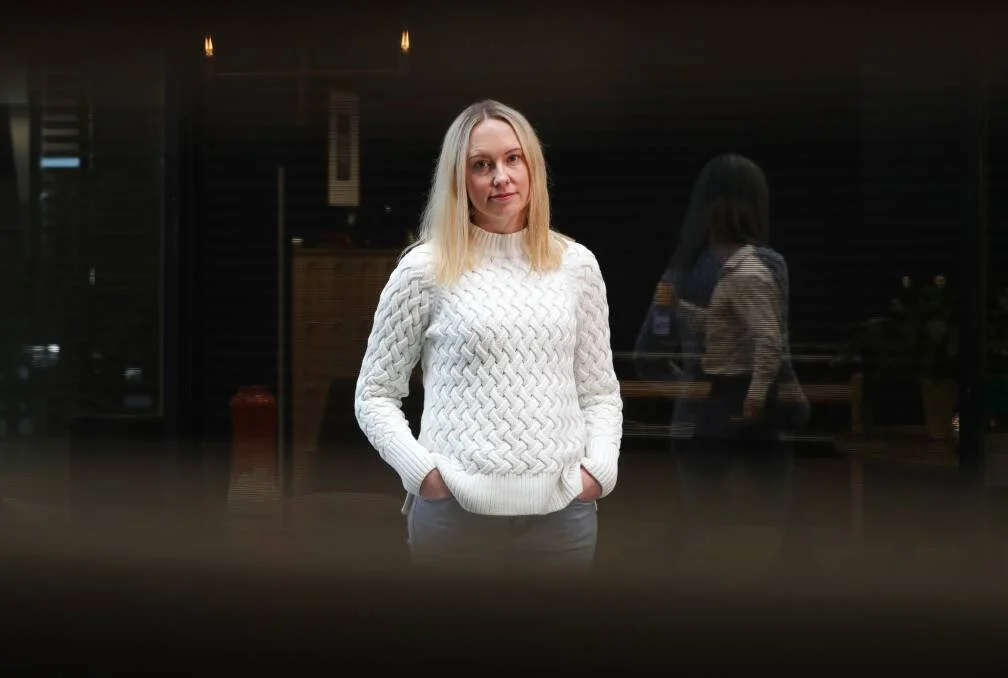
Dr. Erin Twyford (photo credit: University of Wollongong)
Links
Erin Twyford’s faculty webpage
Erin Twyford on Google Scholar
Research
“Revolt(ing) rituals: Critical accounting and the honesty we owe”
Credits
Host and producer: Cameron Graham
Photos: University of Wollongong
Music: Musicbed
Tools: Squadcast, Descript
Recorded: February 10, 2026
Locations: Toronto and Wollongong
