
Episode 057: Matthias Kipping
What importance does history hold for management researchers and business leaders?
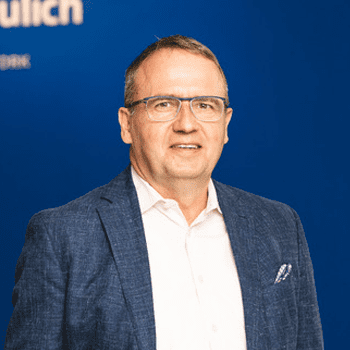
In this episode of Podcast or Perish, I speak with Prof. Matthias Kipping, the Richard E. Waugh Chair in Business History at the Schulich School of Business. Matthias is a business historian. Our discussion centres on his important 2014 paper that distinguishes between two approaches to historical research: "history to theory" and "history in theory." Either way, he argues, businesses need to take history into account when strategizing.
Transcript
Intro
Cameron: The past is never dead. It's not even past." So wrote novelist William Faulkner. My guest today, Matthias Kipping, has a profound regard for the past. He's an historian and a business professor. If you stop to think about that, it's an unusual combination. Isn't business supposed to be about disruptive innovation and the latest technology? Why should anyone care about history? That's what I'm going to ask Matthias, and our conversation is coming right up. …
Matthias, welcome to the podcast!
Matthias: Cam, thank you for having me. Appreciate it.
The Past Rhymes with Today
Cameron: I know from talking to you, before we started recording that you weren't quite happy with the quote that I picked from William Faulkner. You disagree.
Matthias: Yeah, I disagree with that, it's not even the past. It is the past because we can't relive it, we can't travel back to it, and, you know, there's movies that travel back into the past and into the future. But, it is past, and, it's actually a problem that it's past because there is more than one history.
The phrase that everybody knows is that history is written by the victors. And that is absolutely true. It's also written by the people who actually have writing. You know, some peoples in the world did oral histories and we don't have much of their history because it hasn't survived.
The past is unfortunately in the past. We can't relive it, we can't revive it, and it is determined by the victors. So that's why I disagree.
But does it not matter because of that? No, it does matter. It matters a lot because it shapes where we are today, and it kind of repeats itself.
Mark Twain has said—it's attributed to Mark Twain—"The past doesn't repeat, it rhymes." Okay? So it doesn't repeat one by one, but there are certain patterns that come back, and if we know about those patterns from the past, we might be able to avoid similar things happening in the present or in the future.
But unfortunately, again, if you look at the long-term record, we're not very good at that. In my teaching, I usually use this idea of the bubble, and there are lots of bubbles, speculative bubbles, in history, and we always seem to forget that they happen. There is a book written by two economists, not historians—well, historical economists in some sense—of which the title is, This Time Is Different.
That's when people say, "Hey, you know, yeah, yeah, we know there's these bubbles, but this time is different." And, the subtitle is Eight Centuries of Financial Folly.
These bubbles are costly. They're costly in financial terms, but they're also costly in what they mean to ordinary people.
And we seem to keep repeating those mistakes.
Cameron: Well, I will ask you again later in the interview about the way in which history is rhyming right at this moment. But right now, I just want to make sure that I give you a chance to introduce yourself formally to the audience.
From Diplomatic History to Business History
Matthias: Yeah, like you said, I'm trained as a historian. I was really trained as not a hardcore but a diplomatic historian. My earlier work was in diplomatic history, and by some—I can go into why I ended up working in business schools or economics departments instead of history departments. My whole career has been in economics departments or business schools.
Cameron: But what drew you to history in the first place?
Matthias: I always liked stories. Always when I was very young, I read stories. I read old stories, the ancient stories, the mythologies and stuff. And so I then wanted to learn how you write stories and how you get the material for stories, and so that was one reason I went into history.
And history is so rich, you can study anything, and then as a researcher, you dive very deep into things and try to understand what happened.
Though, as I said, in the end, nobody really knows what happened. It really depends on the angle you take, and so on, to the focus you have when you do that research, what you talk about. So if somebody tells you that history is the truth, history is not the truth. We don't know what really, really happened.
Even once we leave this room and people interview us outside this room, we will have very different stories about what happened in this room, just even five minutes later.
Cameron: Yeah, Well, what happens in the recording studio doesn't just stay in the recording studio.
Matthias: Yeah, so that's true.
Cameron: You are a Professor of Strategic Management. You have a chair...
Matthias: Yeah, the Richard E. Waugh Chair in Business History, because that's where I ended up, doing business history. Because once I moved out of my—well, even in my PhD, I already had business involved. My PhD was actually about something totally different than what I'm doing now.
Europe Integration and Industry
Matthias: It was about European integration, the origins of European integration. That's a topic that I care deeply about as a European.
I wanted to know how Europe came together in a way. and if you look at the long history of wars and disagreements in Europe, what we see now in Europe—and yes, I know Russia attacked Ukraine and we have another war—but if you think about how Europe came together, it's amazing in historical terms that we've had the peace we've had for so many, many, decades, after all the wars. For me, it was important personally to understand how Europe came together. And what I found was that industries actually played an important role in how Europe came together.
I can go in some details, but it was really the industries that wanted bigger markets and that wanted unified markets, and that's how European unification started. And it's still largely an economics project... but it's obviously now also a political, cultural project.
Business as Good and Bad Actor
Cameron: I want to challenge you on one thing because I think businesses were also instrumental in Europe falling apart, right? Where did the funding for, different governments come from in Europe at the beginning of the Second World War?
Matthias: Businesses also play a part. You know, businesses can be also—they're not inherently good or bad, but they can have a role that has consequences that are very, very bad. If you look at all the German enterprises that contributed to the Holocaust, and if you look into their archives—and most of the German companies now under pressure have had histories written about their role in the Nazi regime, in forced labor, you know, taking people from the countries the German army occupied and making them work in the factories, even in, you know, producing the gas that killed millions of Jews and other unwanted people. So, business can be a very bad actor.
But in my case, business was in some way a very good actor because they said—well, it was self-interested. That's the nature of business. We know that. But they wanted bigger markets. They wanted cheaper raw materials and, you know, in a world which was then clearly dominated by the US, you could not compete unless you had access to these bigger markets, had access to cheaper raw materials.
I just studied the decision-making process and how they got their voice heard in the decision-making machine, which is politics.
There was somebody who I admire and still admire, Jean Monnet, who was able to combine all these different interests to create a project which then became the European Coal and Steel Community. And that was very symbolic because steel is very important for warfare, and it's very symbolic that European integration started with these two raw materials, coal and steel. Very symbolic, and still is. And then, from then it grew out when people learned how to work together, and they're still working together, and it's never easy.
And as you grow as a European Union, and sometimes countries leave, like Britain. Okay? But it is still an amazing project. I still believe that. The ability to travel around Europe that you have these days... you know, when I grew up it wasn't so easy.
Cameron: No, I lived in Europe when I was younger and you had to have your passport with you to cross the border between Germany and France.
Matthias: Exactly. What I also found was, for example, I did my PhD research in France, and obviously Germany having waged three wars within less than 100 years against France, I felt, "Oh, you know, the French are going to be, very hostile towards me, because I'm German." But the opposite! They were very friendly, and if you ask them who they had a beef with, it was with the British because their history goes back longer. You know, Jeanne d'Arc, that's not forgotten. That's still a very important national figure. And so, so that's again, you see how powerful history is and long-term history is when, you know, you, expect, "Oh, You know they might not be the most friendly to me," and again, they were very welcoming and so I experienced it.
Academic Detours to Consulting
Matthias: But as I said, that's how I started, and then I couldn't get a job because my research showed something that the authorities in the field disagreed with. And you know, academia, you think it's about the truth, and if you can have good sources explaining and showing what you say is actually what happened… and then somebody says no, that person has a more powerful position. So I couldn't get a job in my original area.
Before I did my PhD, I worked two years in consulting and I said, "Okay, there's something else that I could study." And then I started studying consulting, and that allowed me then, eventually, entry into business and management academia because that's obviously an important actor in business and management.
And so it's very accidental that I ended up in an economics department first, and then on into business schools, and ended up for the last 20 years here at Schulich.
Finding a Home at Schulich
Cameron: I don't know if every business school is like ours because I don't have a lot of experience with them. You know, you go and you make guest presentations or something and you meet a few people, but they're people that are like you. They invited you, right? You don't know what the rest of the school is like. But I do know this about Schulich. It's a very big tent. And there is room for people who are studying from all kinds of perspectives, even just within our accounting area, let alone the whole school. So it's a great place to be. I was laughing earlier when you said, you know, as a historian, one of the great things is you can study anything, and this is what I've always said about my position as an accounting researcher. Like, I can study anything. Whatever I look at, there's accounting there somewhere. And the same is true for you then, right? Whatever you look at, there's a history. And oftentimes people are paying no more attention to the history than they are to the accounting.
Matthias: No, that's true. No, no, it's true. Accounting is one of the oldest disciplines, probably, because eventually people started counting and it's fundamental for business to know the numbers and because it helps you make better decisions.
Cameron: We're all here because of accounting ultimately, I think!
Matthias: [laughs] No, so, so, then, like you said, Schulich is a big tent, and that's what attracted me to Schulich. And obviously there were other candidates and eventually I got the offer and I was very happy because when I interviewed here, I met a variety of people and you could see that it is a big tent, and the people were very open. That is not true [everywhere]. I was once in an economics department where everybody was doing hardcore math, you know, Greek-letter economics, and one of my colleagues said, "Matthias, yeah. I think you're not really a researcher. You're a, you're a journalist because you're telling stories. You're good at telling stories, but it's really not research." So, I was very happy when I got the offer from Schulich and could move on, because... But again, I think if you start explaining to people how and why history matters, they will get it. They might not do it themselves, but like you said, in Schulich in accounting, there are some people, or used to be people who did, historical research.
Cameron: Yeah, I've done, done it myself.
Matthias: Exactly. So you can do that kind of research in in many different disciplines.
Cameron: Yeah.
The Paper: History in Organization and Management Theory
Cameron: Now, I want to talk to you about a particular paper. I asked you which one you wanted to talk about, and, you know, most of my guests are eager to promote their most recent paper. You picked one from 12 years ago! I suppose that shouldn't be a surprise given that you're a historian, you want to talk about old documents.
But, here we go. The title of this from 2014, a paper that appeared in the Academy of Management Annals, it's called “History in Organization and Management Theory: More Than Meets the Eye.” Tell me about this paper. Where did the idea for it come from?
Legitimacy and Historical Methods
Matthias: Once you're in a business school, you know, you are going to conferences, you're working with people who are in business schools, you know. I like to work with people—and, you know, yes, I have co-authors who are historians—but I also went to... in this case, it was mainly the European Group for Organizational Studies, where I attended conferences, their annual meetings. And I had people that I worked with on research projects, and they were all management scholars.
The important thing is legitimacy. Whatever you do, is you have to be accepted that what you do is an okay thing to do. It's an accepted thing to do.
Cameron: So just clarify that. Important for what?
Matthias: For… for being listened to, for being heard, for having your work accepted in journals, for having ... You have to show that that's a legitimate way of doing research.
Cameron: Okay. And the onus is on you to do that as an author?
Matthias: And the onus, in a way, is on me to show that. I mean, when you write a journal article, in a way, you have to show that your methods are up to the standards, and that, you know, the way you present, yeah …
Cameron: Well, usually I do that by, in my introduction, trying to engage with specific other articles that are relevant.
Matthias: That's about your contribution to the debate.
Cameron: Yeah, you're contributing to a conversation.
Matthias: But it's also about what you do, yeah? And what historians do is very different from what most management scholars do, and the way they do it, and the sources you have. I always say historians take the sources they can find. You make your sources. Most management scholars make their sources. They do experiments, they interview people. Sure. They collect, they do a survey. They make their sources.
I find sources. I look for sources. And again, as a historian, you always get judged on how good you are at identifying the sources. You know, are these credible? And then evaluate the source. Are these credible sources? It's about sources that you don't make. Even when you do interviews, we call this oral history, it's much more about, you know, collecting memories from people, yeah? And you have to be very critical, compared to an interview where you take a lot of stuff at face value.
You have to be very critical because these people tell you about something that happened 20, 30, 40, 50 years ago, and their view of what happened then will be influenced by everything that happened after.
In my PhD, I interviewed somebody who clearly stated that he was not in favor of reviving the steel cartel, which was from the interwar period, but in favor of a European solution, which eventually became the European Coal and Steel Community, and I basically could show him a document where he had argued for reviving the steel cartel. That's what we call triangulation in historical research, and that's a term that's also in other types of research, but we always have to triangulate sources because, you know, certain sources project certain views. Anyway, so the legitimacy comes from how you do it, in a way.
Yes, you know, I engage with debates, but why would anybody listen to a historian engaging with that debate? I would talk to people about consulting. I would talk to people about other topics that I was researching, but why would they listen to a historian? So I had to be credible. I had to have the legitimacy to be part of those debates, and that comes from explaining what you do, how you do it, you know, so that they can judge, “Is this actually scientific?” Is this academic?
I wrote a book chapter about that, just explaining historical methodology to management scholars. but this article is much more about holding the mirror to management scholars and saying, "Actually, guys, you are doing already research that is in many ways historical. You don't think of it as historical." That's why it's, you know, “History, More Than Meets the Eye.”
Together with a co-author and friend, Bilal Usdiken, from, at the time, Sabanci University in Turkey, and who is a management scholar and organization studies scholar, but who always had a deep interest in history, in the history of management and management ideas in Turkey…
So he came from that. We met through a research project and we decided, let's do something to show the management scholars that already lots of their ideas are using historical sources or using history in their models, even in their theories.
Cameron: Right. This is a review paper, which means that… a review paper for people who aren't familiar with them is one where you've gone through all of the articles that have been published in a particular topic area and tried to make sense of them, to categorize them or understand them in some way.
So this is a review paper about the use of history in management and organizational research.
But if I'm listening to you correctly, if I'm hearing you correctly, you're not necessarily picking papers where the authors would, you know, self-identify as historians.
Matthias: No, absolutely not. None of these authors that we looked at were really historians or trained as historians. This was management organizational theory research, and there are different theories in there, quite well-known if you do management organizational theory research. And we tried to identify… and we couldn't put all the papers because there's such a richness of research.
So we try to identify, you know, some theories and some research… I think we call them research streams or research areas, where history was present. Not necessarily, as I said, with the word, not necessarily by intention, but where we found some history.
And then we had trouble structuring that. We had trouble categorizing. Like you said, you create some categories. You try to provide an overview that, you know, can't be, "Oh, here's paper one, two, three, four, five." You have to sort of categorize them, and we had some trouble. And so we presented our ideas to different audiences and then got feedback.
Two-by-Two Matrix Explained
Matthias: And so this is a long, long-term process, and then eventually we came up with this two-by-two matrix, which is a standard tool.
Cameron: Business articles are always about a two-by-two, right?
Matthias: Two-by-two matrix, yeah.
Cameron: Let me just lay out the two-by-two for people, and I can pop up a visual of this, for the video audience. So, you've got the two different levels, right? So the macro level: systemic, ecological level, the way things link together at a society or an economy level. And the micro level: which is, you know, just looking within an organization.
So that is a fairly easy distinction to make. Fine. But the other one—the one that's harder for me to comprehend—is you've got the labels in one column, “History to theory, and the other one is “”History in theory.” So you're going to have to help me out on that.
Matthias: Yeah, we were very proud of that. We were proud of that and that's a term that's still used in the literature. There's people who will say, "Oh, this is a...", now, to classify their own paper if they use some history. So this is a history to theory paper, and we're writing history in theory paper.
History to Theory vs History in Theory
Matthias: So history to theory is maybe easier. If you use historical data, or data that have a longitudinal dimension to it, and then… because the point of organizational and management research is to create a theory, or to test a theory or to modify a theory. Theory is always a starting point, and that's something I learned as a historian, because as a historian, you don't make theories. That's when I got into this field of management organization studies. And so theory is always there. And so we looked at research areas that would use historical data, longitudinal data, to theorize.
Cameron: So this is the idea of developing a theory that will apply over a long, long period of time. So if these kinds of events happen, this is what we expect to see.
Matthias: No.
Cameron: Is that it?
Matthias: No, that's not… that's a… No.
Cameron: I'm wrong!
Matthias: No, no. So there are theories that try to make very generic and very highly absolute claims about certain types of occurrences or certain types of ...
Cameron: Give me an example.
Matthias: ... behavior. Yeah, organizational ecology is about populations of organizations in a given industry. And they predict what happens as industries evolve, in a sense. You know, the number of organizations that are there, latecomers, and what resources are limited in industry; and then as more come in, resources will be consumed, and then it would be... There are certain… That's a theory that says what will happen ...
Cameron: Isn't that what I just said?
Matthias: … in a common population even if it's an...
Cameron: Isn't that what I just said?
Matthias: [laughs] Yeah, in a kind of way. But what they do in order to show that, because there's a time dimension in this, right? This is not that happens at one point in time.
Cameron: Okay.
Matthias: It happens over time. Right? It happens over time.
Cameron: So this is about the process.
Matthias: So this is about the process.
This is about the process, how industries—and they don't call it industries, they call it organizational populations, and it's an ecology because things happen in that… And so they will make predictions. They create out of this historical data—they usually use just, as I said, industry data that is available, SIC stuff—and then you show what happens in that population. But to show what happens and to theorize that, you need longitudinal data. You can't just have a snapshot. Right?
And so that's what we call history to theory. Okay? So they theorize based on longitudinal historical data. Yeah? Right.
That's the one. The other one is you have theories that are… that actually have a time dimension. Path dependence is one of those, where what happened in the path, or when you get on a path, determines what you do next. And you know, that path determines how actors in that industry, for example, will do things. The best is probably the oil industry here, and we're currently at a path-breaking moment where the oil industry—you can study the origins—but once you're on the oil path, you create infrastructures that all support that.
So that's path dependence. Tells you that once you're on a path, it is very difficult to leave that path, and it looks at the mechanisms that keep organizations on a different path, or industries on a different path, even societies. So we are the century of oil, and that's clearly path dependence… but we're now at a moment where we're probably moving onto a different path, the path of electric energy, electrics.
And so studying those—and again, you create a theory that explains how path emerge out of the alternatives, and you create how a society, how an organization, gets on a path. And then you create theories how this path can be broken. But the history itself is in the theory.
The path is in itself historical. So that's what we call the history in theory.
So there are theories in management that are inherently historical. None of these people thinks of themselves historians, okay? They're all management—but they take this historical dimension very serious when they theorize. Yeah? And the others take historical data to theorize. Basically, that's what we're trying to say.
Cameron: Yeah.
Historical Cognizance in Research
Cameron: So, the gist of your paper is saying that we need to take context seriously, and one of those contextual dimensions is the historical one.
Matthias: Yeah. So what our then wishful thinking was, at the end, we say all the literature that—I mean, not all the management literature has one of those, is history in theory or history to theory, but there's a huge body of literature that is either history in theory or history to theory. Right? But what we said is, even if you're not doing that, what we would like you to do, because again, when you're studying management and organizations, theory's always what you want, so every paper will make a theoretical contribution. Has to, otherwise it doesn't get published. I don't know. You know that better than I do.
But what we're trying to say to them, at the end, even if you're not one of those, I think you should be cognizant. And that's why we call it historical cognizance, as a term. You should be cognizant that your theory might have a time limit or might be time-bound, might be context dependent. The context is obviously a historical context.
Theory Needs Humility
Matthias: So instead of trying to be—and that was kind of what we try to say— being a natural science which develops theories that supposedly are forever, yeah? And we know that—Thomas Kuhn—that they're not because you have to reshape your theories once you know the empirics don't work anymore for what you say.
We're currently in one of those moments with dark matter and the universe, where the physics theories don't fit anymore what's been observed.
But what we're saying is, don't pretend... And there's been other people before, we consider the pioneers of bringing history into management studies, but they'd said that, “Don't have that science engineering mindset. Try to have more of a humanistic historical mindset when you do research, and be cognizant of the fact that your theory might be bound by a place and a time, a context.” Okay? A place and a time, and it might work there. So don't pretend that what you say works forever, yeah? Be cognizant.
Context-Bound Research
Matthias: And there are some papers—a certain theory of entrepreneurship—when, because they did their research on a certain time period, they said, "Well, we can be certain that entrepreneurship worked that way at that, in that context, but we will not pretend that it works forever like this."
And I think that's was our call to management organization research. Not many have heeded it. It’s to say, be cognizant that whatever you try to theorize here is context dependent, place and time, and that theory might hold for a certain place and time. It might not hold for other places and time.
Cameron: It sounds like what you're calling for is a little humility.
Matthias: Yeah. Yeah. but it's very difficult because it's a collective exercise and the editor and the reviewers will always ask you to develop this general theory, or contribute to that theory, and what we're saying is, you know, exactly, be humble and recognize that, based on what you actually research, because in the end, you research a very small part of the world or part of whatever phenomenon you're looking at, and be humble and say, "Yeah, here, this is what we think happened here."
And then you can even speculate about if you change the context, what might happen then? I think that'd be much more interesting and that would generate much more debate and would generate more comparative research and say, "Yeah, hey, in our context in this time, this is what happened to this phenomenon, and here's another one."
And so I think that's what we're calling for. Has that happened? No.
Working With Historians
Cameron: Well, one of the specific, um, suggestions that you had, or recommendations, was that management scholars try to interact with theory-conscious historians. Was the phrase you used? Right? Yeah. So to actually engage. This is the idea of multidisciplinary approaches to research.
Matthias: Again, it's not that easy, but there are examples where that actually has been happening. And entrepreneurship research is actually some place where that is happening, where now, historical approaches are seen as making valuable contributions to theorizing and to research.
And there is... It depends on the context, and the people I'm working with—and I'm not an entrepreneurship researcher, but I have very good contacts—are at the Copenhagen Business School. And again, that's a place where there's always been an interaction between the humanities and the more hardcore disciplines.
And it depends on the context. And Schulich, it didn't end up because I got drawn into other work, you know, onto other jobs here at Schulich. But I think Schulich potentially is that. And I still regret a bit that I didn't talk more to the accounting people at Schulich because there was that historical cognizance, and there were people who were doing historical research, and we never ended up writing a paper together or something like that.
But Schulich, you need context.
Cameron: Not yet! Not yet!
Matthias: Not yet. Yeah. but Schulich is a context, and that was [what], I said, drew me to Schulich, a context where this kind of research is clearly possible. And I'm still working with Eleanor Westney. The latest thing I've been doing is a handbook of industry dynamics, and maybe we have a chance to talk a little bit about that, a handbook of industry dynamics, and she's one of the co-editors.
She is a very well-respected international business scholar, but she has that historical cognizance. And so we're working together. So that's something. But it's not every school. Not every business school will be the place where that is possible. But there are places and you do see more historical work in management journals, so that was another thing. You do see more historical work.
Publishing Barriers
Matthias: But usually you don't see more management scholars writing in historical journals because they're not the FT50. Do you see what I mean? So there are reasons why that doesn't happen. But there have been special issues, there have been special issues of quite well-renowned journals, and there have been more historically grounded pieces in top management journals, and there is a number of people. But it's still hard because there's still going to be the push to very heavily theorize. And sometimes, and I've worked on topics with management scholars, and they say, "Well, can we, should we, we want… we need to say this." And I said, "But, you know, the evidence doesn't… my historical evidence doesn't support this."
So there, It's you always have to compromise in some way. Okay? And I've gone back a little bit, in the sense that I feel I don't want to theorize too much. I feel much more comfortable really sticking with my sources and talking about the historical context in which things happen. But there are people, and there's way more than 12 years ago, okay? And there have been special sessions at the EGOS conference. There's always now, there's actually two or three history-themed sessions that bring people together that have an interest in bringing management organization and theory and history together. I feel pleased about that, that, you know, there was... We didn't start that, but in a way we gave people also a language to talk about it, history in theory, history to theory. So, I feel pleased about this happening.
Cameron: Yeah. Well, you should. It's a big contribution.
Matthias: Well, I'm not sure it's me, but there's lots people.
Cameron: No, but you have been a part of that.
Matthias: I've been a part of that.
Making History Acceptable in Management
Matthias: I've been pleased to be a part of, you know, making history… I don't know how you say that.
Cameron: Matter?
Matthias: It's a good German word, how, you know, acceptable… There's a good German word for that. I'm originally—probably you heard that from the accent—I'm originally German. It's called “salonfähig.” It's you're admissible into the good society. You know what I mean. So salonfähig…
Cameron: Salon.
Matthias: …is where... Salon. Salon. Yeah. So it's, you're admissible into that. And so I think there's more people that manage to get into good society.
Teaching Leaders History
Cameron: So your paper is very, very focused on academic research. How do you make history admissible to business contexts, business practitioners, business people?
Matthias: Yeah. Business people always look at the future, so it's very hard. Business people, very hard, so you have to get them early. So I do that with my students. Okay? I do that with my students. and once they get it, I think they won't forget it. I just show them how history can make a difference to them as leaders if they have a bit more of a historical consciousness, a bit more history cognizant. And I do that through case studies.
Cameron: Well, let's talk about that. The course you're talking about is called Skills for Leadership. It's a required course in our MBA program here at Schulich, and it covers a whole bunch of different aspects of leadership, at the skill level. Actually learning to think critically, actually learning to embrace a historical perspective, for instance. So that's your contribution. You lecture specifically on the connection between history and leadership. Can you tell me a little bit about what you cover and what the class is like?
Matthias: Yeah. I give a guest lecture. So this course consists of two parts. One is where they get the skill set and work with the professor, and then all the sections of Skills for Leadership invite guest lecturers, and I'm one of the guest lecturers. The title is "Why Leaders Need History."
And so I, again, use different examples of, you know, how we can be a better leader if you know more about history.
Bubbles Versus Trends
Matthias: One of the things is I talk about is these bubbles. And I show just a picture of, you know, the first known bubble, is the tulip bulb bubble, when tulip bulbs, which was really not worth much, became worth as much as a house in Amsterdam. So really it went crazy, but then came back crashing down to earth.
And then I'll show them the curve of Bitcoin, and then we have a discussion. And the discussion is then about... because Bitcoin, you could argue, it's not a bubble. Okay? You could argue that. There's bubble elements in the Bitcoin curve because the spikes, but in general, it is actually a different. It's changing the way financial transactions are conducted. Okay.
What's a bubble and what's a trend? So I discuss. And, yeah, that's a very important distinction. So I give them some tools.
I also talk about how different narratives, or absences of different narratives, shape thinking today. If you don't know the history of—and that's especially in the global context—if you don't know the history of the interaction between different countries, you do not understand how the leaders of these countries act or, will act, once you do certain things.
Opium Wars Lesson
Matthias: And there I use something that everybody should really know about anywhere in the world, is the story of the Opium Wars. And very few people know about that. If you've gone to school in China, you will know about this because this started what the Chinese called a “century of humiliation,” where they were subdued.
Not really a colony, but where the Western countries dominated China as a country, and that lasted for about 100 years, from the mid-19th to the mid-20th century. And nobody knows that. And it was built on opium.
Cameron: Well, nobody here knows that. Everybody in China knows it.
Matthias: Exactly. Everybody in China knows that. So it's always good when I have Chinese students in the class because I will ask them, "So did you hear about that?" And I show a painting that they will have seen in class—a woodblock print, actually—they will have seen in class and they know. And I show the picture of the Mandarin, of the bureaucrat that was sent to stop the Westerners from taking opium to China, and they know his name, and so on. So they know this story.
But it's about these stories. Do you see what I mean? When we… The pandemic: Everybody knows about the First World War, and again, I talk about that in the class a little bit. Everybody knows about the First World War, you know, the poppy and what you learn in Canada, Flanders Fields, blah, blah, blah. Nobody knows that more people were killed at that time through the flu pandemic. Nobody knew that until we had the pandemic, and people then said, "Oh, we've had pandemics before."
Cameron: “By the way, this has happened before.”
Matthias: Yeah, exactly. “By the way, this has happened before.” Yeah? And that had happened before. So pandemics have a long occurrence in human history.
So only when something happens, where we say, "Oh, maybe that happened before," we look at it.
But I think what we need to do is to understand how history works, to avoid mistakes, but to also see patterns that keep repeating themselves. So, going to war without understanding the complex histories of a region in the world, really complex histories and long-standing histories that are present for the people who live in that region because they grow up… like these kids in China, they learned about the Opium Wars.
So going back to China, when then the West says to China, "You should do this. You should do that," we put pressure on China to say, "No, you did this for 100 years. We're not going to take that." Okay?
So, you can't deal with China properly unless you're conscious of that 100-year history that is there for everybody in China. And it's there. It's not just the leaders, it's everybody knows this. You see what I mean? How would you feel if then you get told how to do things? Because that's what happened for 100 years, and it was based on opium.
The opium—actually, people misunderstand that—wasn't the object of the trade. The object of the trade was the tea that the Chinese had and that the British wanted, because it became part of their culture, and only China had tea.
Again, a history: the Indians will all tell you that tea originated in Assam or Darjeeling. No. Tea originated in China. Only in China.
The second insult that the British did, to pay for the tea, eventually they used opium, which they grew in India. And that was a cheap way of paying for the tea because you got the clients addicted, and you could sell more opium and get more tea. Once they had, then, following a war… The Chinese wanted to stop the sale of opium. There was a war, and the British won the war. Once they had the war, they opened up China, and eventually they sent somebody, a botanist, to steal the tea plant and moved it to India.
So, you know, constantly China is accused of IP theft. This is a big IP theft, and now if you look at the big tea producers in the world, most of them are former British colonies.
That's where the historian... That's something I also say to the students. You go through the world, and when you see something where you're surprised, ask where it's coming from. Okay?
Curiosity In Practice
Matthias: You'll, you'll be laughing when I tell you why I got into this opium war story. It came from drinking a Chinese beer. I went to China for a conference. I drank Tsingtao beer, and I said, "That tastes like German beer."
And it does, and then I looked into that. So it's my curiosity. As a historian, you're always curious. You always say, "Why is that that way?" I encourage every leader also to be curious. As a historian, always say, "Where does this come from?"
And so I found out that the Germans had their concession, which is an exterritorial state in Tsingtao, and because they wanted their beer, they brought brewers from Germany and created a brewery there, and that brewery was then nationalized when Mao took over, and that they're still brewing that beer according to the German brewing laws.
Then I found out about the tea. Then I found out about the opium. But it started with my curiosity.
Do you see what I mean? That's another thing that historians can teach the students, is be curious, ask why it is the way it is. How did it happen?
Cameron: I would love it if our current leaders in the world were more curious.
Matthias: Yeah. I know. I know. If you actually go to China, you will see the Chinese leaders are very history conscious, very, and for them, history is also something long. We can say, "Oh, Taiwan was never part of China." Yes, it was. So you need to understand, if you deal with history conscious people, how they think of history. You can't just say, "Oh, no, I ignore that history" in dealing with them. Do you see what I mean?
History In Geopolitics
Matthias: You know, the Middle East is the most history rich part of this globe, in a way. That's where humans started settling down first from their tribal past. It was one of the richest agricultural areas, and so there was lots of people in very small spaces, and it has a long history of wars, conflicts, and so on. But you can't just barge in there without understanding ...
Cameron: Oh, you can!
Matthias: Yes, you can. Yes, you can, but the outcome will not be positive. And you create a new history that people won't forget.
Do you see what I mean? You have to be conscious of the history of a place to then do things in a way that, not necessarily are acceptable to everybody, but you can… And that's anywhere you go. Do you see what I mean?
Canada - Latin America Ties
Matthias: Again, one encouragement to the Canadian leaders, for example, is Canada has a long business history with South America, very long. I mean, we should go to China, we should go to India. Absolutely, totally agreed, because they're important in the world. But in terms of business history, Canada has a long history of investing in Latin America and having long, good business relations. You know, Scotiabank, Rick Waugh was the Chair, the CEO of Scotia. When I talk to him, he talks about all the things he did with the bank in Latin America. But it's not just Scotiabank. The long history, going back into the 19th century, Canada has with Latin America. So that's another area where we should be active, on the business front with Brazil, for example. We have a long, long, history.
When you know history, you make better choices. That's what I would say to our current leaders. When you know history, and if you don't know it, ask somebody. There's always an expert. There's always somebody. Ask somebody.
But we tend to ignore that. We just think we can act purely in the present.
So that's what I would always... You know, get some good historian to talk to you. There's lots of good historians, and you have to get them to get out of the historical debates about what happened or didn't happen. But there are incredible lessons to be learned in history.
Cameron: Matthias, thank you so much for talking to me. It's been an education.
Industry Dynamics
Matthias: Can I still say five minutes about this industry dynamics?
Cameron: Oh, yeah.
Matthias: Just want to add that.
Like I mentioned, I did this with a Japanese colleague whose originally idea this is. He was always focused on industry, because we focus either on the very high level, government, or we focus on the firm, then in the firm, we focus on the leaders and the entrepreneurs. But industry, we use that but we never analyze it.
What got me is that, like you said, everybody's always about change, and everybody's always about disruption, and especially now. What we decided to do—and then we brought Eleanor Westney in—is to look at industries over the long term, basically since they exist.
The agricultural industry is probably the oldest, and then the crypto industry is a few decades old, if that. And so we wanted to see whether there were patterns at some point. It's difficult because each industry is specific. But what is very clear is that no industry is constantly disrupted.
There's usually longer periods of stability, and then some disruption happens at some point. The industry changes.
Regulation Drives Change
Matthias: If you look at what makes them change, yes, technology matters, but governments tend to matter more. Regulation tends to matter more. Those kind of changes have a much more direct impact, very often.
And again, it depends on the industry. So technology, yes, is important. But, very often regulation can be equally important, if not more important.
Cameron: Can you give me an example of a change in regulation?
Matthias: In the financial industry, that's one of the big changes. As soon as the regulation changes any of these rules—the SEC, all of that—that changes behavior dramatically.
But in food, the food industry, once you get regulation of ingredients, once you get regulation of standards, health standards, that dramatically changes the way you make and sell food.
So you can go into every single industry. You know, engineering-based industries, again: regulation on materials, regulations on standards, ...
Cameron: The auto industry, emissions.
Matthias: Yes, emissions regulations. And dramatically. That very often shapes technology because you have to then develop the technology, or find the technology that's already somewhere, to apply it. What we think is a technological change is often regulatory change that leads to new technologies or to finding technologies that some people have.
Very often you have technologies that are being developed, and then all of a sudden that gets favored over other technologies.
Geopolitics and Resources
Cameron: So besides talking to the historians, we need business people to start talking to political scientists.
Matthias: Yeah, I know, geopolitics, for most industries a major factor: where you go, which countries you go to, geopolitics, now we are becoming aware of it again. We thought that was not, you know, so important. Becoming aware. But it's always… again, in the history of industries, it's always been a major factor.
You see the scramble now for the rare earth metals. The mining industry is a very political industry. Always has been very much a political industry. Anyway, their history is so rich.
Outro
As I said, walk around the world with open eyes, see something where you don't understand why it's the way it is, and then just find out where it comes from.
There's a lot of wisdom to be gained from understanding history.
Links
Grant Packard’s faculty webpage
Grant Packard on Google Scholar
Research
“Thinking of You: How Second-Person Pronouns Shape Cultural Success”
“Investigating Variation in Replicability” (Many Labs Project)
Credits
Host and producer: Cameron Graham
Photos: Schulich School of Business
Music: Musicbed
Tools: Squadcast, Descript
Recorded: February 2, 2026
Location: Toronto
