
Episode 058: Russ Belk
How do we extend ourselves through our possessions?
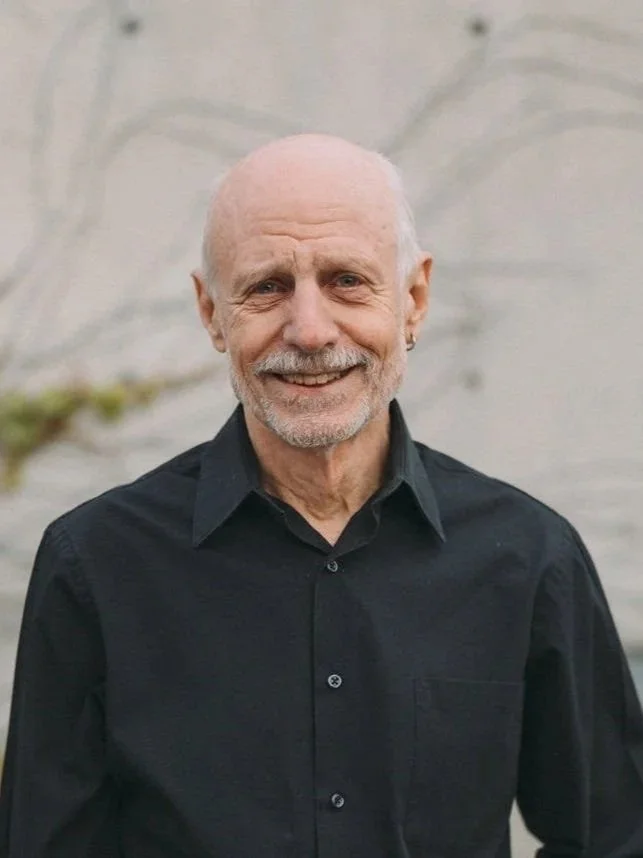
In this episode of Podcast or Perish, I speak with Prof. Russ Belk, the esteemed consumer culture theorist from the Schulich School of Business. Russ is widely known for his research on the connection between the things and experiences we consume and our sense of self. I talk to him about his seminal research in this area, and about how he remains so extraordinarily prolific as an elder academic.
Transcript
Introduction
Cameron: What does it take to publish as many good academic papers in one year as some decent academics publish in their entire career? What does it take to open up a new area of research within an established discipline? What does it take to be Russ Belk?
I'm going to speak to the man himself and find out. Coming up, my interview with the pioneering consumer culture theorist, Professor Russell Belk of the Schulich School of Business.
We're going to talk about how consumers find meaning in their possessions, which seems to me like a pretty important thing for marketers to understand.
Russ, welcome to the podcast!
Russ: Thank you, Cam, for that nice introduction
Cameron: Well, that's my introduction. Can I get you to introduce yourself in your own terms?
Russ: Sure. I'm Russ Belk, a professor of marketing in the Schulich School of Business, in York University.
Consumers, Their Selves, and Their Things
Russ: And my interests lie in consumers and their things, and relationships between people and things. And especially when we really single those things out as sentimental keepsakes, as souvenirs, as things that we think represent us in some way.
If you look at things like gift-giving and collecting, these are instances where we pay particular importance or particular attention to the nature of the object, how it fits the person or how it fits an assemblage of things. So…
Cameron: Cars, in North American culture anyway.
Russ: Cars used to be. You know, students now are less interested in cars and more interested in going online and seeing what they can find on their smartphones. And so fewer are getting their driver's licenses now than used to.
I mean, in my day, and perhaps yours, getting your license was really the freedom license. Then you could go out on your own in different places with different people.
And so that's disappearing apparently.
Cameron: Well, students are not bounded by the room that they're in anymore.
Russ: That's true.
Cameron: Right. So the paper that I want to start with is, um, the landmark paper called "Possessions and the Extended Self." It was published in 1988. Landmark in so many senses. It opened up a whole new field of research. It's also incredibly well-cited, over 17,000 citations at last count, which is, you know, for those who are not academics who are listening to the podcast, that's a lot.
Now I want to just ask the most obvious question, to me anyway, as an academic: Can you define what you mean by “self”?
Russ: That's a good question, and I'm still struggling with that because I think we define ourselves today in different ways than we might have 100 years ago or 50 years ago for that matter. We have a digital online persona, for example, in addition to our physical body. We're able to augment the body in new and different ways. We're able to rely upon AI and various other electronic developments to help define ourselves.
And so I think the notion of self is an evolving idea, and it's one that fits us into a particular environment. If we were in another culture, we would answer that question somewhat differently and maybe be less individualistic about it, more collectivistic more interdependent rather than independent.
But the self is basically our idea or someone else's idea of who we are.
And so William James, in 1890, wrote a book on psychology, a seminal sort of text, and in it, he talked about this notion of the extended self.
He didn't really call it that, but he called… He said, "A man's self," and, you know, put in “person” in place of “man”…
“A man's self is all that he can call his. His land, his bank account, his works, his productions all of these things help make him feel larger when they wax and lesser when they wane. "
And so I would imagine a lot of people that are tied up in the stock market are feeling a little bad right now, and not quite as big perhaps as they saw themselves being during the boom part of the 21st century, until very recently.
So we call ourselves “aspirational selves,” I suppose. We describe ourselves in a little more grandiose ways than probably other people might describe us, and we describe our aspirations.
So it's not just who we are right now, but it's our past and our future as well. That may change over the life course. That early on, we may look to the future. Later on, we may look to the past, and in the middle, we're who we are at the time.
So I'm obfuscating, obviously. I'm not giving you a quick and dirty answer to what the self is. But these are some of the ways that what we think about as being our self is shaped.
Cameron: Well, I notice in the paper that you use different formulations, different word formations around self. You talk about self-definition, you talk about self-perception. You rarely just talk about the self as an ontological thing. So is this really an epistemological understanding of the self, how we know ourselves?
Russ: Yeah, I would say another pseudonym would be the sense of self, that it's the sense we have of who we are. And an objective measure of self is bound to fall short of what we inwardly feel constitutes ourself. And probably the those who have an intimate relationship with us would think somewhat differently of us than we do of ourself, even though they might claim to know us very well.
Cameron: Right. So h-index for an academic.
Russ: No, I don't think that's an adequate definition of anyone.
Cameron: But it is very much a sense of self, right? In a business school setting where we're asked to contribute to the business school ranking by publishing papers in very particular journals, right? Not those other journals, these particular journals. Those publications are part of our CV. That CV is a presentation of ourself in an academic context.
We update our CV every year to the dean so that they can compile all the publications into the school's kind of impact ranking or whatever, whatever it is that they do with those. And it is a measure of ourselves. Fighting against those measures is excruciating. Think of somebody who's got a YouTube channel or a TikTok channel with the number of subscribers, the number of likes they get to a video. Those measures are constant in our lives.
Russ: They may be constant, but I don't like metrics to define who we are. When we participate in anything that is competitive - and academia as you're describing it is competitive in that sense, but it could be a race or it could be anything that we're doing as an avocation - the metrics are a way of keeping track.
For some people, money is a metric. So they might look at their bank account first thing in the morning, or their stocks, and see how they're doing. And indeed, people that do that, feel good when the market is rising and feel bad when it's not rising. Their sense of self is depleted.
But the metric is a crude index of one aspect of ourselves, at best. And you know, I would like to think that academics have an advantage because ideally someone, even after we're gone, might look at a paper of ours and remember not us, but what we've said.
And in that sense, I don't think people fear death as much as they fear death with insignificance, and they like to feel that they count or are significant in some way.
Some people do that by looking at their children and grandchildren. Other people do that by looking what they've accomplished in their profession. Other people have an inward sense of accumulating wisdom or accumulating relationship depth or any number of other things.
But the metrics themselves are a fairly superficial way or a very superficial way of trying to see how we stack up.
Cameron: Mm-hmm. Are not possessions also a superficial way of seeing how we stack up?
Russ: Yes, they are. And we've done some work actually on decluttering and professional declutterers who come into your home and workplace and computer and help simplify your life.
Cameron: They help redefine you.
Russ: Yes. Except that they oftentimes have to come back a year later to do it all over again.
Not to say that we're all hoarders, but the stuff piles up and sometimes there just isn't time to get things organized and neat and live in a Marie Kondo kind of way.
Cameron: Yeah. Yeah.
Functions of the Extended Self
Cameron: There's a discussion in the paper of the different functions of the extended self, right? All the different roles that it plays and how it relates to questions, the kinds of questions that someone like Jean-Paul Sartre would ask about the difference between having and being and doing.
And you describe doing, I think borrowing from Sartre as a transitional phase between having and being. So having is somehow more fundamental to Sartre than doing. Having, like, I would've pitched being as the thing that he wanted to emphasize, but he's also talking about having as being quite fundamental.
So I'm trying to reconcile that revelation - to me - in your paper about Jean-Paul Sartre. I perhaps misunderstood him. So can you explain to me the different roles that these possessions have in developing this sense of self? Like, what is it that makes you want to study that particular thing?
Russ: Well, I think we live in a commodity society, and we live in a consumer society. And in the past, while homes, for example, have been relatively cluttered during the Victorian era and were somewhat simplified now, and I would argue we're headed toward greater simplicity, and perhaps smaller homes as well, that our stuff tells a story about us, and this differs over generations so that younger people might value sporting goods, for example, because they represent something that they can do and perhaps do well.
Older people look back and look at mementos photographs of family, things that describe what they have done in the past, and those contribute to their sense of being. But Erich Fromm once asked, "If I am what I have, and what I have is lost, who then am I?" If we invest too much in these external representations of ourself, that we're vulnerable.
And so one thing that consumer research tells us is happening is that we're beginning to appreciate experiences more than things. And if you want to make someone happy, don't give them a tangible gift. Give them an experience maybe tickets to a cruise or, you know, how much you value this person may be indicated by how lavish a gift it is.
But do something with them. Take them out for an experience, a dinner, rather than spend that money on a tangible object. And so I think the tide is shifting, and there are some generational differences, as I mentioned in that, but also some differences over time as well, and of course over cultures.
Culture is important in all these things that we study.
Marx and the Fetishism of Commodities
Cameron: Mm-hmm. Yeah, you do get into Fromm but also Marx and, you know, this, this notion that the fetishism of commodities is actually a mistake and can lead to a false consciousness. So there's a sense in which this understanding of ourselves through what we possess is misguided.
Russ: Yeah. Uh, interesting side story. Karl Marx, who talked about...
Cameron: You're going to tell me you knew Karl. You're not that old!
Russ: No, I did not know Karl. But he had an overcoat, and when he was writing Das Kapital, he was writing in the Reading Room of the British Library, which used to be available to tour, but now it's closed.
And at any rate he would go as long as he had his overcoat because he would look the proper English gentleman. When his overcoat, as often happened, was in hock, in pawn, he would not go. He would send the children off to school barefoot and would not send them at all before he would stop writing.
But he became a hack journalist for a while to support himself after they'd gone through all of his wife's fortune. And he would regard this overcoat basically as a fetish object. Now, fetish itself was a term that anthropologists used disparagingly to describe quote-unquote primitive people as opposed to we civilized people.
And so there's that additional meaning, and then there's the Freudian sexual meaning of fetish as well. And a guy called Ellen has really argued that these three things are all the same. They're investing energy in objects, whether foolishly or right-headedly. Right-soul, I suppose. That these things don't really represent truly who we are. They're little mementos in our life that may bring back some memories for a while.
I had the experience of when my mother died a few years ago, going through all her things, and I'm an only child, and so my daughter came and helped, for a while, who's also an only child. But nevertheless, most all of the things that were meaningful to her were not meaningful to me. I mean, there might be photos of people on a tour that they took, and I didn't know these people. They didn't mean anything to me.
So I had to learn to jettison those things in a fairly small timeframe of less than a week and because she lived in Minneapolis in the States. And in doing that, I've begun to appreciate, I think to a greater depth, that we are not what we have. That we are what we do, who we do it with, what our legacy is in terms of the next generation that we've helped along in one way or another.
And it really is doing that affects our sense of being, more than having.
Digital and Archival Representations of the Self
Russ: So even though this paper was making the argument in terms of tangible things, I had a follow-up paper that was looking at what is the extended self in the digital world, and how do we relate to the way we're able to represent ourselves digitally?
Cameron: Who owns that digital archive of ourselves? You know, our Google Calendar entries.
Russ: That's a good question. Yes, it's certainly not us. It's the tech giant monopolies that own that digital trace. Although there are things like the WayBack Machine that let us look at the past and what we or someone else or the world was like at that point in time.
There's a technology that is being promoted by some organizations to create a Thanabot. We use all of your digital traces to recreate a facsimile of you that we can interact with. So you could be doing this robot 50 years from now. Well, maybe we'll both be dead in 50 years.
But the Thanabot is a potential interactive representation of who we are. Now, there's limits to that because we don't put all of our moments of life up online, and there's going to be… We can put some other material into it, as well as things that are online. But nevertheless, it's not a full representation of who we are, but it is a facsimile.
Cameron: Mm-hmm. Yeah. My father died in 2004, and I still have a couple of boxes of his files under my desk in my office just because I can't bring myself to get rid of them. They're his… his work and his activities. And especially important in those are, I had a full set of all of his Day-Timers. You know, the paper diaries, ring-bound, spiral-bound paper diaries where he'd record every appointment, and he was a very, very active professional and was always meeting people, and a lot of these names I remember.
So I've kept two of them that contain a lot of names that I remember, and it's just, you know, that record in his own handwriting of his activities day by day is a way for me to just remember who he was. So this is very much an extension of his self into my life.
Russ: Sure. And I would gather that's an archive that you can go and contemplate and learn something new every time you go.
Cameron: Yeah. I try not to go too often. You know, I have my own life to live, but, uh, you know, it's, uh, it is one of my possessions, right? And I feel an extension of myself to him, that connection to him.
Extending Our Selves Through Other People
Cameron: I'm wondering then about the relationship of the self to other people. I know that's something you touch upon in this paper. You mention collections, our stamp collection or whatever, that we see ourselves in. You mention money. You mention pets, but you also mention other people. So what is that particular relationship between our us and others that somehow extends who we are?
Russ: Well, I could answer that, I guess, in a couple of different ways. There are people that would name-drop people that others might know, and this will somehow let the status rub off on them. But there are other people that really are a part of our friendship networks, our kinship networks, and they enrich our lives. They're very much part of it in good health and ill health and so forth.
So yeah, I think one of the things that elderly research tends to suggest is that people that have more friends live longer and are happier as a result of it. So again, it's not the things, it's the people and the experiences that that they provide. So this is not the sort of claiming of status or to talk about wearing a friend as if they were an accessory that we go out clubbing with them, or something of that sort. But rather the people that we really do have deep relationships with, and our progeny, would be a part of that even if they're at a distance or some remove.
Cameron: One of the ways of describing yourself is through your relationships to others, who you are, right? I mean, I just described myself as the son of a person who was very active professionally. He was a chaplain. And you know, I somehow feel that connection to him through his activities and through who he was.
Other people describe themselves in terms of their extended family, in terms of their ancestors, right? So these are all the social context for ourselves that we want other people to understand if we want them to understand us fully.
Russ: Yeah, there's a book by Elizabeth Stone called Black Sheep and Kissing Cousins, and they're talking about family mythologies. And families oftentimes have a lineage that they trace back to royalty, or that they trace back to famous people, or that they trace back to a missing fortune, that if a little thing happens, I'll be able to access this fortune that lies there awaiting. And so, in one way or another, we're looking at our lineage in doing that and claiming correctly or incorrectly that we have this link that goes back and enriches the pattern or the picture of of who we are.
So my son-in-law traces his ancestry to Robert the Bruce, and so, Scottish memorabilia around, and actually when my grandson got married, they wore kilts and the whole kit and that was a part of the ceremony and he was very proud of that. Now whether he was actually related to Robert the Bruce or not, I don't know. I'll trust his genealogy to be accurate. But he gets a sense of his self and he reinforces it in his surroundings, by virtue of that lineage.
Gifts and Sacrificial Giving
Cameron: There's a… I don't want to get off on too wide a tangent here, but you mentioned the importance of our possessions in terms of gift giving, which is a way of establishing a relationship with other people. How important is it that the thing that you're giving be something that is associated personally with you?
You know, like, if I were to give you, you know, a cup that I had made myself, right? That's one thing. And if I just bought you a mug from the local coffee shop and gave it to you, that'd be something different. So how much does it matter that the thing, the gift that we give, is actually representative of who we are?
Russ: Well, that's part of what a gift should, ideally, be representing you, the giver. But it should also ideally look into the soul of the recipient and find something that they truly want, that they might not even admit themselves or would find too much of a guilty pleasure to purchase for themselves. And it should be a surprise. It should be luxurious. It should not be a mop bucket or, no matter how much they need them, a kilo of potatoes.
Cameron: Or a coffee cup.
Russ: Or a coffee cup. Now, I looked at this, when we go digital. I mean, we used to make digital tapes, cassette tapes, and eventually, I guess CDs and DVDs. But now it's a playlist. We don't create this mixed tape with the effort and love that we've put into it, and it's no longer a tangible object, and it's in a sense too easy.
There should be a sacrifice, ideally, as well. The story of Jim and Della, where Della has beautiful long hair and Jim has this wonderful treasured pocket watch…
Cameron: This is O. Henry?
Russ: O. Henry's story, "Gift of the Magi." And so they each give what they think is the ideal gift for the other person. So Della sells her hair and uses it to buy a platinum watch chain for Jim. And Jim pawns his watch so that he can create combs for Della's hair; he can buy them.
And so each of these gifts, practically, are worthless. A total miss, but a total hit in terms of the perfect gift because they've made a sacrifice. It's something the other person truly wants and is looking deep inside their soul to see.
Jim happened to notice Della looking in a store window at these combs, and got them for her. And Della, of course, knew about Jim's watch that he would put in a pocket and then pull out.
So that's sort of an ideal prototype, I suppose, of what the perfect gift would be. And we can't define it, but we can look at how close it comes to this ideal of the perfect gift. So it should have all of those attributes.
Cameron: Yeah. You even talked about organ donation. Now that's a sacrificial gift!
Russ: Yeah. Yeah. I know someone that gave her kidney to her sister, and this is the ultimate sort of gift to give someone. The recipient of that, you would think, would be extremely grateful, and that does, of course, tend to be the case, but they also fear that they're getting some of the traits of the donor, by virtue of having a body part from that donor in their body. And so if they're a male and get a female organ, they may feel that they've been effeminized by doing this. If they're white and they get a Black kidney, they may feel that they've become more racially tolerant suddenly, because they're more Black themselves now.
And these things, physiologically, are hard to imagine, but nevertheless psychologically can have an impact.
Cameron: Have I got a plan for the United States. Everybody swap kidneys!
Russ: There you go. In a random basis.
Cameron: Oh my goodness.
Consumer Culture and Technology
Cameron: This paper, as I mentioned, was written in 1988. It's had a long time to take root and to establish a whole field of research in consumer culture theory. But recently things have changed in terms of technology, right? Technology is becoming a much more important area to research for people who are trying to understand the way that people think of themselves. Obviously, AI is changing how we see ourselves and what we think we are capable of. So I wonder what your thoughts are on that aspect of technology, AI.
Russ: While it's a little bit different. I think we could look at it as an extension in the same way that spell-checkers and calculators are, that these are things that help us do things better, more efficiently, more quickly. Anne Catherine Hales is a literary critic, and she wrote a book called My Mother Was a Computer, and it's because computers used to be people. They would be people who did calculations.
Cameron: It was a job title.
Russ: Yeah, exactly. But now we think of computers as being machines and we don't call them machine-computers, and we don't call them mechanical or artificial computers. We just call them computers.
And I think that same ideology will happen to technology that we are cathecting. It would be a psychiatric term. We're making it a part of ourselves in the sense that we no longer realize it unless something goes wrong.
And so my guess, and it's just my guess, is that we're headed toward an era where we'll take AI for granted, realize its limitations, and realize its opportunities and benefits. And it's not going to be as much a cause for concern, of cheating by using it, as happens in our classrooms today when we have to use lockdown browsers so people can't go online and have AI answer a question for them. Why not? They can use calculators. That's fine. But I'd say, let a thousand flowers bloom and we'll see what happens.
Cameron: Yeah, I have no idea what to make of AI in the classroom right now. I'm struggling with it as almost every professor is. We're either thoroughly embracing it or running from it. I'm going to try - when I get back from sabbatical - I'm going to try to make use of it during my lecture time, to explore what is AI saying about this topic? Because obviously the students are going to be using this. How do you know whether what it's saying is actually useful or not? That's the discussion we need to be helping students have.
Russ: That's a pedagogical exercise, I think.
Cameron: Well, good pedagogical exercise for me to go through. The students, I hope, will teach me how to think about it.
The Extended Self and Disability
Cameron: I'm really interested in one more question before we kind of broaden out into some of the activities that you're involved in, like teaching. I want to understand the relationship between the extended self and disability. Because disability is often, well, it's completely socially determined, but it's also technologically shaped, right? So we have a person who uses a wheelchair, a person who uses a cane. These are markers for a stigmatized identity in our society. Whereas contact lenses are not, right? Contact lenses or even just eyeglasses that everybody can see. We don't think of a person wearing eyeglasses as having a disability.
So these possessions: the glasses; the hearing aid that may or may not be almost invisible; the cane, which may or may not be decorated to suit a person's personality; the wheelchair, which may be functional or may be high tech or, you know, may be sports-oriented or may be very functional. These are all ways of extending one's sense of self in the world.
So how does stigma enter into these things? I guess what I'm asking, uh, you can see I'm struggling to ask the question, but when we see ourselves and build a sense of our selves through our possessions, sometimes that can get pushed back on us and stigmatized by others. How does that affect our sense of self?
Russ: Well let me answer the non-asked question. Not all disabilities are visible, so if we're autistic or bipolar or even schizophrenic, that may not normally be visible to other people. And in that case as well, we can do something in terms of internal medicines that we take to change our physiological and psychological state.
But for the things that you mentioned, where there is a visible component to it, in that instance, it becomes an extension of self. Andy Clark, who's written about self-extensions in the environment, that we look at road signs and rely upon them. We might look at our GPS and rely upon it. The blind person might rely upon a cane to get along. These are really becoming a part of self and for those who need them and use them regularly, yes, they are stigmatized, hopefully to a diminishing degree, but hardly disappearing.
We've done a project on people with severe facial differences, which could be congenital or a result of an accident or a late-onset disease, and they have -- because we're talking about severe facial differences -- their face could be lopsided, or they could be missing an eye, or they could have a skin condition like vitiligo, which gives you a splotchy sort of multicolored look.
And in all of the cases, we've found that people struggled with their disabilities, especially in high school. It was a time when they were bullied and -- unless they were in a small private school in which case people defended them.
But eventually, after high school, typically, they began to be comfortable in their own skins and began to find other people like them, which is an important thing, which they did online and in person as well, and began to, again, I'll use the word cathect, make these things a part of their identity and who they are. So "stigma be damned" is sort of the outlook in that case. Not to say that there aren't still slings and arrows that you have to deflect or absorb.
One man who had -- he was missing an ear, Treacher Collins syndrome, and cleft palate and some other things -- was out to dinner with his wife. And he's a bright man. He's a photographer and does a number of interesting things. Black man.
And the waiter came up and asked his wife, "What would you like for dinner?"
And then he turned briefly to the man and then turned back to her and said, "And what will he have?" Assuming that because he looked different, he must be mentally deficient in some way and didn't have a sense of self that he could respond from.
And so while those things are humiliating and we have to eventually learn that it's the other people's problem, it's not our problem, we haven't done anything to be ashamed of. And we're going to stop the cosmetic surgery. We're going to stop the heavy makeup. We're going to stop the laser treatments and just be who we are.
The medical model says, "These people have a problem, and we, the medical community, can fix it." Or at least that's the old medical system. Ableism, it's called.
But these people say, “Ableism be damned.” That, "I am who I am." I guess it was Popeye's slogan.
And trying to live within your skin is an important thing. And where possible, educate other people, but not, you know, accommodate them where they're trying to take a photo with you that they can show off to other people, "Look at this freak that I found." You know, "freaks" were one way that we one time treated disabilities.
There is… maybe it's tokenism, but brands are embracing disabilities. Ellie Goldsmith -- Goldstein, sorry -- is a front for Gucci. Barbie dolls now have a wheelchair Barbie and an amputee Barbie and a vitiligo Barbie. And so they're expanding and normalizing.
And we did a follow-up study online of what people thought about this, and most people that had or knew someone that had such a visible disability thought it was wonderful, and the children could see persons who were like them now. But there were other people who were still bullies and still ridiculed this and said that that's not appropriate, that we should have ideal dolls that we could aspire to be like, implying, again, an ableist sort of perspective.
So I'm dodging around your question, which was about stigma. But stigma is something that is cultural. It can be learned and unlearned, and I don't think that there's anything that is inherently stigmatic, that stigmas are cultural things that, uh… You know, I'm suffering with ageism right now. I tried to tell the people that wouldn't talk to us because we didn't have any facial disabilities that, "Look, ageism is a facial disability." But they didn't buy that.
And I guess, just to get in one other thing on that project, we'd initially contacted NGOs to try to source people, and they didn't want to cooperate with us for the same reason. But in this project, we really engaged people, and they engaged us. We found them initially through social media, and then we did intentionally some people that didn't have a social media presence.
And we co-created this video, and we asked people to film themselves getting ready in the morning, and to answer a series of questions, and to show us some of their childhood pictures and pictures from the past. And they were most gracious in sharing with us. And they allowed us, with committee ethics approval, to show their faces and to use their real names. Normally, we don't do either of these things with research. We try to anonymize. But they were proud of it and wanted to show.
So we made a video, with their help, and co-created it. And we'd showed it at a film festival associated with Consumer Research Conference, in Seattle, and one person came from California to be there for the Q&A that followed the premiere of the film, another person from elsewhere in Washington State. And they really loved the experience and people really loved getting to know them.
And you know, I think there are lots of opportunities for co-creation with projects that in this case were not just academic papers that we were trying to publish, or films, but were actually advocacy research. We were trying to change people's opinion.
And the fact that it won the Best Film award at this conference made the NGOs come to us now and say that they'd like to participate in one way or another. So we felt good about both the co-creation and the ultimate humiliation of the NGOs that wouldn't cooperate initially.
Co-authorship
Cameron: This co-creation of research with others is fundamental to any kind of a self-aware academic, right, that you are not dealing with research subjects that you can anonymize and treat as data points, but they are people who are helping create knowledge with you.
Russ: Absolutely.
Cameron: Tell me about the way that you work with other academic authors. Like, do you have any idea how many people you've co-authored papers with?
Russ: I don't, but 10 or 15 years ago I was asking, I counted up and had 125 at the time. It's some multiple of that now. Yeah. Lots of people all over, and that's a wonderful experience.
Cameron: How do these co-authorship opportunities arise? Do people come to you and say, "Hey, I've got a paper you'll be interested in," or is this a network effect, that these are people you already know?
Russ: No, it's oftentimes people come to me or I meet them at a conference and we start discussing something and an opportunity arises. But I was working on NFTs, non-fungible tokens, which is sort of a strange thing because all you really get is an NFT that's out there on the internet for anyone to download. You have a blockchain guarantee that it's yours, but that's about it. You have no rights to do anything with it, usually. And a guy in India sent me a paper, talking about art history basically, and tying it into philosophical considerations, and I said, "Wow, I'm doing some stuff on NFTs."
It's the same sort of thing because his premise was, in conceptual art and minimalist art to a degree, it's all about the idea. The execution, this is like the Middle Ages when there was the master who sketched out the thing and then the apprentices would fill it in and do the actual painting. It's like that with the conceptual art which is not really meant to be consumed or sold at all. It's a part of the landscape, in the case of landscape art.
And so at any rate, we began to bat ideas back and forth, looking at this overlap in these two things, and we came up with this notion of psychological possession. Not psychological ownership, where your students feel the chair that they sit in every day is theirs, even though they haven't been assigned a seat. But rather, the sense that we incidentally pick up and experientially pick up a lot of things. A tune that you heard in the background as you were walking along. You saw a Cybertruck and that memory of what that strange looking vehicle is like sticks with you. And these things continue to be there but in an almost unconscious sort of way. Sometimes we attend to them.
Consuming Art
Russ: And this -- I'm going off on a tangent. I hope it --
Cameron: I don't mind at all
Russ: There are artists who, there's one, Yves Klein, who is a 1950s French artist, and he would sell tickets to a show that he was having, and he rented an auditorium for it. And people came in, and there was absolutely nothing there, and that was his show. And so he also would sell the experience, and people, besides their entry ticket, could buy it and own it. They'd be given a certificate of authenticity. But he said, they had to pay 20 grams of gold, which would be quite valuable these days and was at that time as well. But if they would agree to burn that certificate -- and one has recently been auctioned off for over a million dollars -- he would then take all of the gold he received and throw half of it in the Seine, in the river, and he sort of flaked it off so it would disappear.
And so some people did that, and some people did not, but it's arguing still that what's important here is the idea. It's not the art itself. It's not a tangible receipt, but rather is the idea. You might have read about Maurizio Cattelan, who had an exhibit at the, um, the Miami… blah, blah, blah... at any rate, at an art show in Miami.
Cameron: I can't help you 'cause I have no idea what the art galleries are in Miami!
Russ: Well it's an art show. And at any rate Cattelan rented a small gallery. And on the wall, he took a banana and duct-taped it to the wall, and he called it "Comedian."
And Art Basel is what I was trying to think of. Art Basel Miami.
And he sold it for $120,000. So he went to the store and bought another banana, taped it up, and sold it for $120,000. So he raised the price to $150,000, but before he could sell it, another artist came along, ripped off the duct tape, and ate the banana.
So if it's the idea that's important, it's not the banana which will rot and go away. But he also gave them directions of how to mount the banana and how often to change it, and what direction the duct tape should go, and so forth. But he also made it into an NFT, which he sold for $1.2 million.
And so in this case, it was tangibilizing and therefore, in a sense, bastardizing this idea that he was selling the experience, the concept itself.
Another artist, Max Haarich, in Germany, sold individual pixels. They weren't a part of anything but he had a green one, and a red one, a blue. Had an invisible one, as well. And you would get a little… remember slides? A little slide that showed the different color pixels, and the other invisible one was just black.
At any rate, these are all illustrating the idea that, in conceptual art, it is the idea that's important.
Or the Spiral Jetty out in the Great Salt Lake, and it's something no one could own. And in fact, it went underwater for about 16 years. It's back now that the lake is drying. And so in that case, it's a remote thing. Most people would not visit it on a trip to Utah. But nevertheless, it's the concept, it's the idea, that's important there as well.
So at any rate, we tied all of this, or we're hoping to tie all of this together in an argument that we're dematerializing, we're ephemeralizing, we're miniaturizing. We're headed in this direction that we call "toward nothingness." Now, we don't actually want to get to nothingness, but we're headed in that direction. And so things like digital books and digital music, and any number of other things that are making things disappear from our lives are consistent with that trend.
And we think that it's also tied to an emerging push toward the sharing economy, the subscription economy, and the streaming economy. And so if you buy a car now, chances are that rather than just the lump sum payment from a loan or from your bank account, you'll be able to subscribe to things as well, like heated seats and they just turn that on remotely and you've got heated seats, or a horsepower boost. Again, they just turn a little knob -- envisioning it as a knob -- and you've got greater horsepower.
And so the... there's one that BMW offered that intrigued me. It's the most expensive one. It's $98 a month, and I forget exactly what they call it, but it makes your electric vehicle sound like an internal combustion engine. It goes vroom, vroom! And all of that's artificial because it's just got a single continuum of transmission. And that's… It reminded me of… I don't know if you ever did this, kids, we would put, on our bicycle spokes, playing cards to make it go pt-pt-pt.
Cameron: Yep, I remember that.
Russ: And it's equally silly, and yet it's the most expensive option that they have. I don't know how well subscribed it is. So at any rate we're minimalizing, we're ephemeralizing, we're digitizing, We're dematerializing, and all of these things are in the direction of nothingness. And we don't actually want to get to nothingness, quite. That would be like the Emperor's New Clothes, where he's realized that he's been duped.
Cameron: Well, an invisible pixel is pretty close.
Russ: Pretty close. Pretty close, yes. So the concept is what's important, and we're tying these together and trying to project it forward, and you know, that's our endpoint or endgame, and where this is headed. But not quite nothing.
PhD Students and the Extended Academic Self
Cameron: I want to talk about something that's a follow-up to this idea, or the question, about co-authors, and it's something I don't often get a chance to talk to other professors about, which is teaching PhD students. Specifically, the relationship between the supervisor and the student. You've got a lot of experience in that. Can you talk to me about what it means to be a supervisor and what that relationship is like for you?
Russ: Well, I mean, there are different people that do this differently. There's some people that hand out topics, and that is carrying forth their own research stream. I'm the opposite of that. I encourage the students. I teach them methods, I indoctrinate them in the literature, in consumer culture theory. I try to help them along the way, and we have discussions, but they've got to come up with their own idea, and then we'll shape it maybe a little bit. But it's a process of learning to get ideas, rather than take ideas, and do something with them. And I'd like to have that originality, that possibility of doing something that is really different.
I am also not like some people in my faculty that would say we should have research theory that guides our research. Theory-aided research, it's often called. I prefer a more inductive and abductive approach.
And so we did a project recently with a doctoral student and a postdoc, and they are two women from other cultures, from Bangladesh and Iran, and we-
Russ's smart watch: 1:54 PM
Russ: Sorry. Touched it in the wrong way.
Cameron: Your extended self is speaking to you.
Russ: Yes, indeed. Uh, we found one cartoon, and it was a cartoon of a human man hitting a robot female, really punching her, and it was a graphic sort of form, like you might find in a graphic novel. And I searched online and found that this was free access, and I found another one that was a human man hitting a human female in exactly the same form and background.
And so one of these two doctoral students was a bit of an artist and was able to create things online. And so we created two others where there was a robot male that was hitting either a robot female or a human female. So we then had a 2x2 experimental design.
I know. Cliché, yes.
But we added a second 2, so it was 2x2x2 because we had male and female that were part of this.
And the dependent variable was a story. They were to tell us a story about the graphic novel that this frame might go into, 150 words or more, and we recruited people online from Prolific Scholar, and the stories were wonderful.
And so we did a, it's called grounded theory approach, you're probably familiar with, and did some coding at several different levels. And we came up with themes like “Toxic masculinity, and "Robot rebellion," and "Romance gone awry." Even though it was an act of violence, a lot of times there was a romantic story that became a part of the story that was told.
And at any rate, we sort of contemplated that, and then we set it aside for two months and came back to it. Didn't pay any attention to the coding, particularly, but we looked at the stories overall, and we glanced at the codes and said, "What might this be an example of?" It's called defamiliarizing, and a couple of other techniques that go with it.
And we came up with an entirely different explanation that, stories of not doing well in the dating market, incels (involuntary celibates), sometimes in these stories, or being defeated by robots in various ways, physically, mentally, and even emotionally, where we were cuckolded by a robot. That is to say, the human was.
And we latched onto something. We tried to have an entirely original... but we did fall back on an interpretation of Promethean shame. Gunther Anders is a German philosopher who wrote about this concept in the 1950s. Very prescient. And he said that in Promethean shame, we become ashamed to be mere humans. We have machines that are perfect. They're thought out very thoroughly as opposed to random genetic couplings. And they are indefinitely living, and we can replace them or repair them if they go awry, which we can't do for very long with human beings. And so we begin to feel ashamed of having been born rather than created and designed.
And as a result of that, we looked at these stories and we said, in one way or another, that's what these stories are telling us. It's about humans ultimately feeling that they're losing out to robots and AI, and that this is a human fear that goes beyond just physically being destroyed by a robot rebellion, which is one of these stories.
Some of the stories -- many of the stories -- fell back on television and movie plots, and many of them also fell back on slavery days, that these robots had a right to rebel because we were exploiting them, we the humans. And that there were things that were done to them like splitting up couples, splitting up families during slavery, and so forth.
And so in one way or another, I think we not only feel guilty for not being machines, but we feel guilty for what we're doing to our machines. That as they become more anthropomorphized, we feel more of a sense of competition with them and a sense of deficiency and cruelty, in some cases.
And so maybe this is a little far-fetched, but this was the, the sort of ultimate interpretation that we came up with at the second level of analysis.
Cameron: It sounds like stories are fundamental to your approach to research, and I wonder if that is the way that you have managed to remain so prolific for so long.
Russ: Never thought about it that way, but I guess. I had to do something for a consortium of art students and art history students, about storytelling. And I began to look back at my research and I quite literally created entirely fictional stories in four or five of these things. And in other instances, I guess you could argue that it's an opportunity, especially in qualitative research, to tell a story about what's happening that makes it plausible and that helps hopefully enrich it, but gets the point across that a story can do that, in both a more innocuous way and a more effective way, perhaps, than a didactic sort of "this is how it is," and this is the, again, the 2x2, or the matrix of the table that we create.
Cameron: Hmm. It's a delight to have you as a colleague, and I look forward to watching how the story of Russ Belk continues to unfold.
Russ: Well, thank you, Cam. I look forward to following your work as well.
Cameron: Thanks for being on the podcast.
Russ: Thank you for having me.
Conversation with Producer Andrew Micak (video version)
Andrew: Earlier in the conversation, you were talking a lot about self and identity, and you were talking in the form of lineages. And do you find that maybe your sense of self might have changed as you got older? Do you think someone in their twenties would have the same sense of self, you know?
Russ: I don't think even a month ago, a week ago, I was the same person as now. I think we change all the time. I mean, how many of us at 12 years old wanted to be professors in a business school? I guess that -- unless we had a professor mother or father -- that that's unlikely. So yeah, I think that the self changes with different age periods, with different family situations, with different medical situations. All of those help shape who we are at any given point.
Andrew: This might be a little bit more kind of weirdly theoretical. You mentioned William James as like the root of a lot in your major paper. But he's very much like a modernist writer. Is there a sort of postmodern sense of the self, or building on top of that, or something along those lines? Or am I completely off base here?
Russ: Oh, I mean, there are a number of people. Don DeLillo, for example, writes some interesting fiction. And you know, it depends on my mood. I may be reading something in digital science fiction and film and so forth one day, and the next day I'm reading about disabled people in the past, or slavery, or, uh… I'm very eclectic and if you look at my library, it would reflect that.
And I guess I'm making the shift now to be more digital in the books that I read. But you get a different sort of information and it's much... I used to go to the library twice a year and go through the current issues of all of the journals, law, medicine, history, whatever it was, and look at the table of contents. And if there was something interesting, I'd look at it, and if I indeed thought it was interesting, I'd make a copy and bring it back and develop first on note cards and then gradually a database, an index of these things.
Now, of course, we can just search online and we can Google Scholar things or various other techniques. But I think we decontextualize things and take them out of context sometimes, in doing that, so there's a danger as well in that. So as a result, I think I've nurtured being eclectic and multidisciplinary in terms of my reading. I'd never go to the HF section or whatever it is that's business journals. That would be an exception that would send me there.
Links
Russ Belk’s faculty webpage
Russ Belk on Google Scholar
Russ Belk’s Wikipedia entry
Research
“Possessions and the Extended Self”
Credits
Host and producer: Cameron Graham
Photos: Schulich School of Business
Music: Musicbed
Tools: Descript
Recorded: March 16, 2026
Location: Toronto
